
Ant hills can lead to lawn deterioration and dry patches. Experts have explained which natural remedies should be used and why it is important to address the causes of ant appearances.
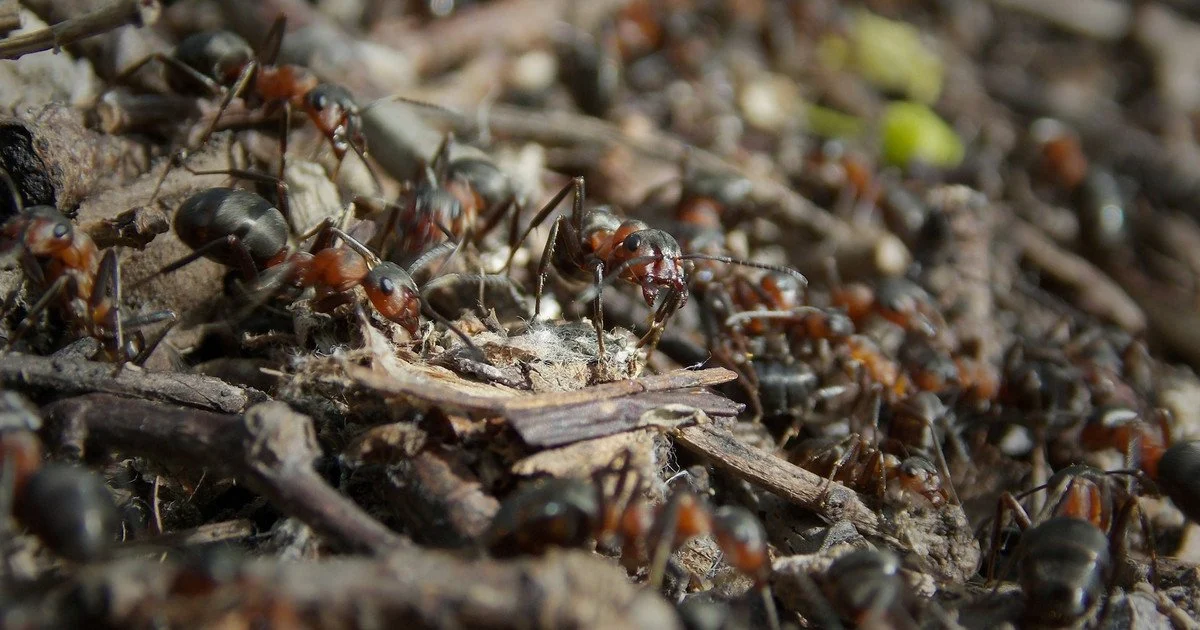
Ants / © unsplash.com
Ant hills in the yard not only spoil the appearance of the lawn but can also gradually damage it. Pest control experts have explained which natural methods help get rid of ants without using synthetic chemicals and why eliminating the causes of their appearance yields the best results.
This was reported by Martha Stewart.
Specialists note that ant hills are not just mounds of earth on the lawn. They are entrances to underground ant colonies, whose tunnels can damage the root system of the grass. Additionally, the ant hills themselves can block air access to the lawn, causing individual patches of grass to dry out.
Experts name diatomaceous earth as one of the most effective natural remedies. It is a natural material formed from the fossilized remains of microscopic algae. According to Bob Gilbert, it damages the outer protective layer of insects’ bodies, causing ants to gradually dehydrate.
To use it, simply lightly sprinkle diatomaceous earth in areas where ants travel. At the same time, the expert warns against applying it in a thick layer, as the wind can carry the powder, potentially affecting beneficial insects. Furthermore, this remedy loses its effectiveness in damp conditions, so it may need to be reapplied if necessary, as new ants emerge from the colony.
Another natural method is to pour a water and soap solution into the ant hill. This solution kills ants only on direct contact but does not penetrate deeply into the colony, so it usually does not reach the queen. Because of this, the method can only temporarily reduce insect activity on the surface.
At the same time, soap solution should be used with caution, especially near lawns and ornamental plants, as the alkaline components of soap can negatively affect vegetation.
Ed Dolshun also recommends using diluted white vinegar. To do this, simply mix vinegar and water in approximately equal proportions and treat the areas where ants travel, as well as the entrances to ant hills. According to him, ants navigate by scent trails, and vinegar helps to destroy them, which slows down insect movement.
However, this method does not affect the colony itself. If regular surface treatments are stopped, ants may re-establish their routes. Experts also advise not to spray vinegar solution directly on plants to avoid damaging them.
Experts consider eliminating food sources to be the most important step in controlling ants. Bob Gilbert recommends cleaning up pet food, spilled birdseed, fallen fruit, and other food debris that attracts insects.
Ed Dolshun adds that as long as worker ants have something to feed the queen, the colony will continue to exist. This is why it is also worth checking the yard for open trash cans or other accessible food sources.
It is equally important to eliminate sources of moisture. According to Bob Gilbert, ants often build ant hills near places with constant access to water. These can include leaky hoses, pet water bowls, or other damp areas.
Ed Dolshun also advises fixing leaking outdoor faucets, removing excessively wet mulch, and not leaving firewood piled in damp locations. According to him, if food and water sources are not eliminated, one will constantly have to deal with the consequences, as these conditions attract ants to the yard.
We previously reported on how to extend rose blooming: learn about proper pruning, fertilizing, and watering.
Коментарі Сортувати: Нові Старі Популярні Надіслати