
What parameters might the Russian MRBM “Oreshnik” have, what are the assessments based on, and how can lineage be traced to the Soviet project “Skorost”
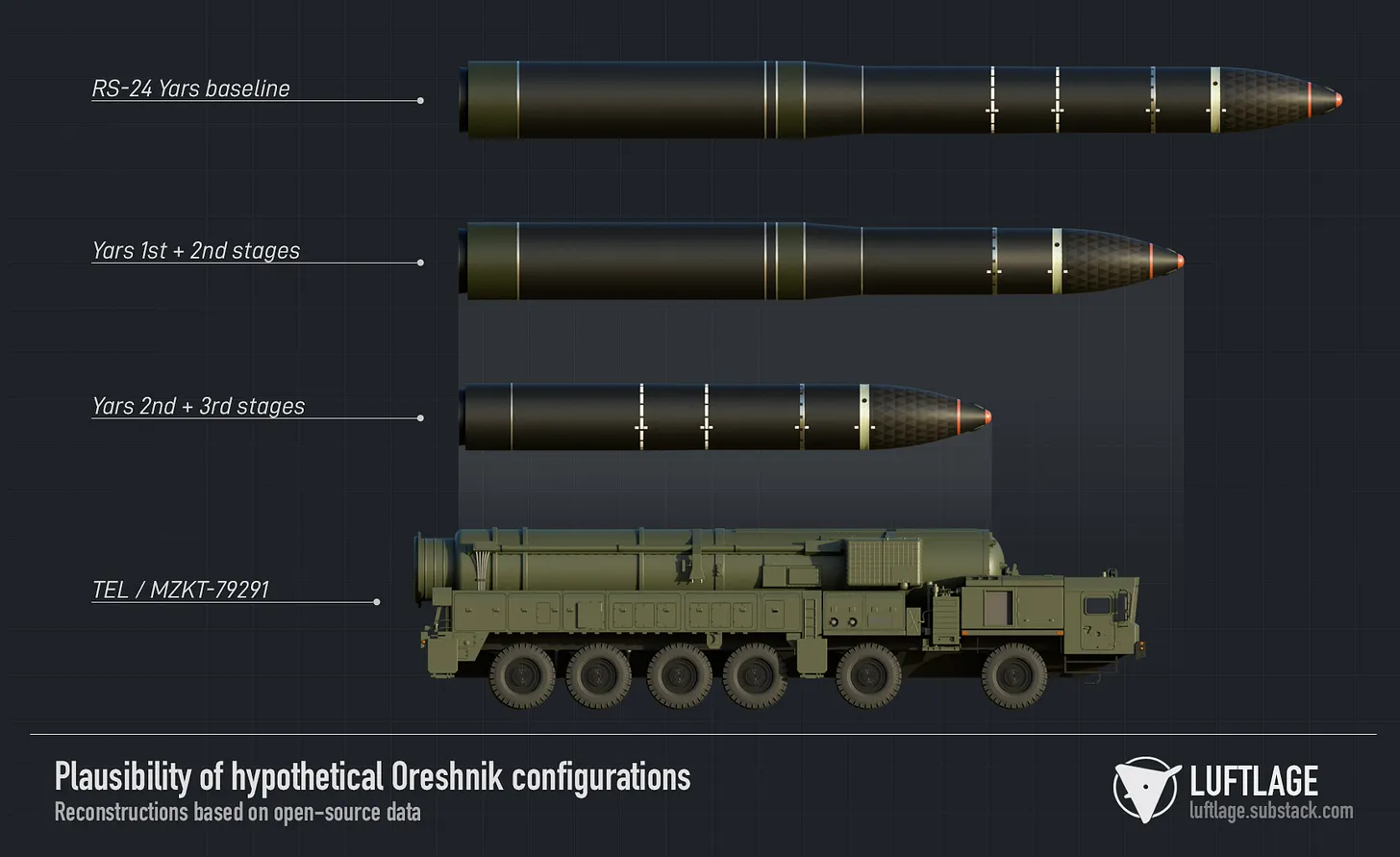
The foundation for the Russian medium-range ballistic missile “Oreshnik” could be a combination of the second and third stages of the “Yars” ICBM. Although it was previously believed that the “Yars” first and second stages formed the basis of the “Oreshnik”.
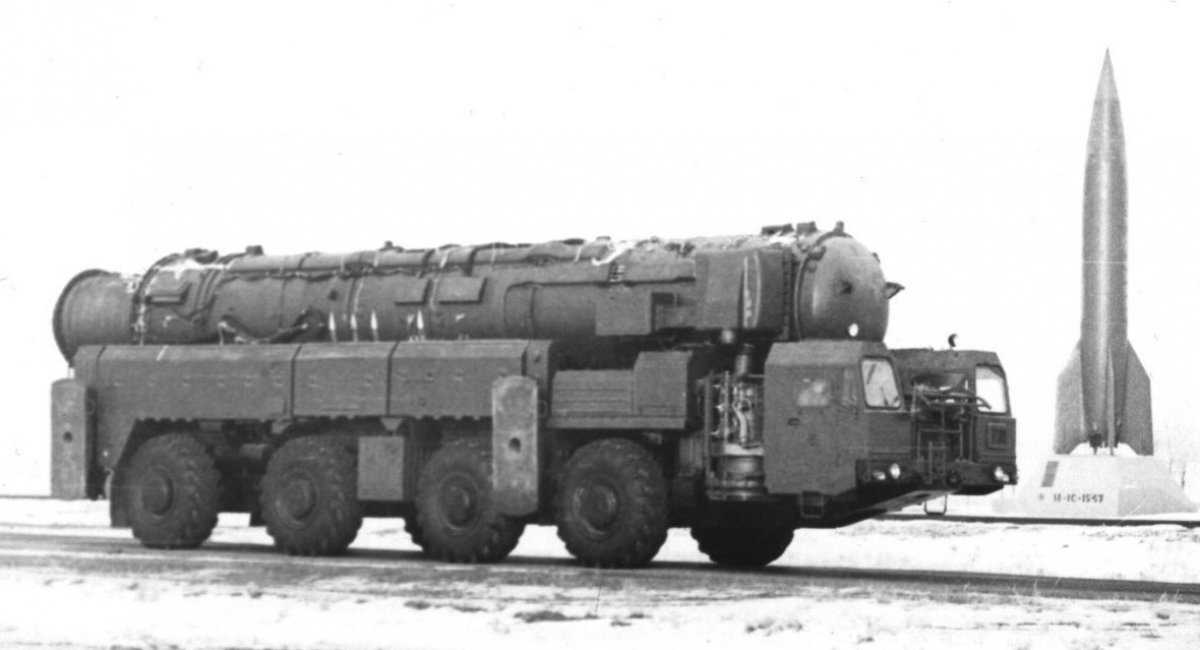
If this assessment proves accurate, then the direct predecessor of the Russian MRBM “Oreshnik” is the unsuccessful Soviet medium-range ballistic missile project “Skorost,” which had only one (failed) launch in 1985.
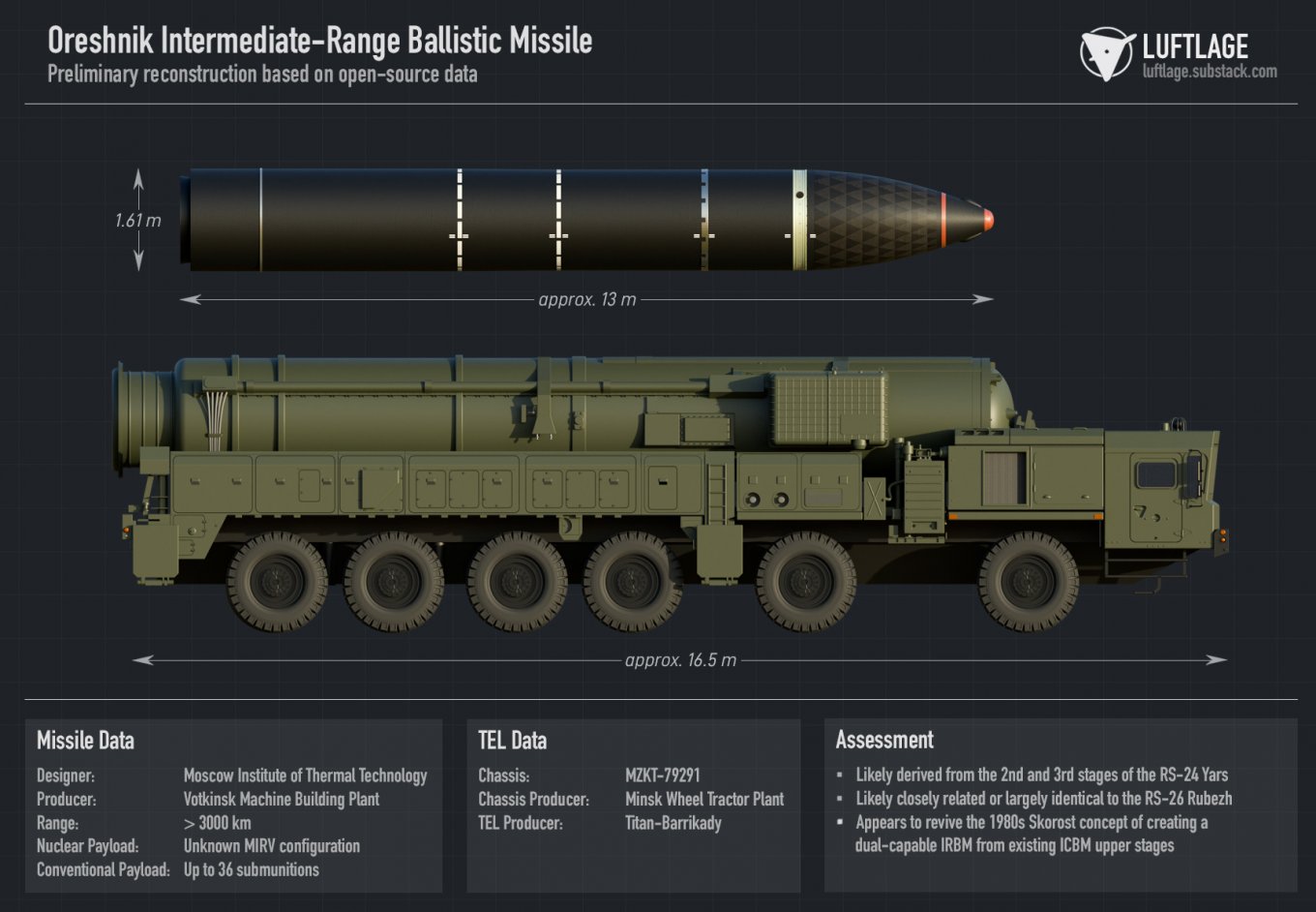
Such details emerge from a publication on the Substack platform by Western researcher Fabian Hinz, who summarized all publicly available details on the MRBM “Oreshnik” and described the following picture.
To estimate the possible dimensions of a mobile launcher for the MRBM “Oreshnik,” there is not only the photo from Lukashenko’s office but also a 2011 patent from the Russian enterprise “Titan-Barrikady,” a photo of a prototype launcher based on the MKZT-79291 at the mentioned enterprise’s site, and even a probable photo of a mobile launcher for the RS-26 “Rubezh” at the Kapustin Yar training ground in 2016.
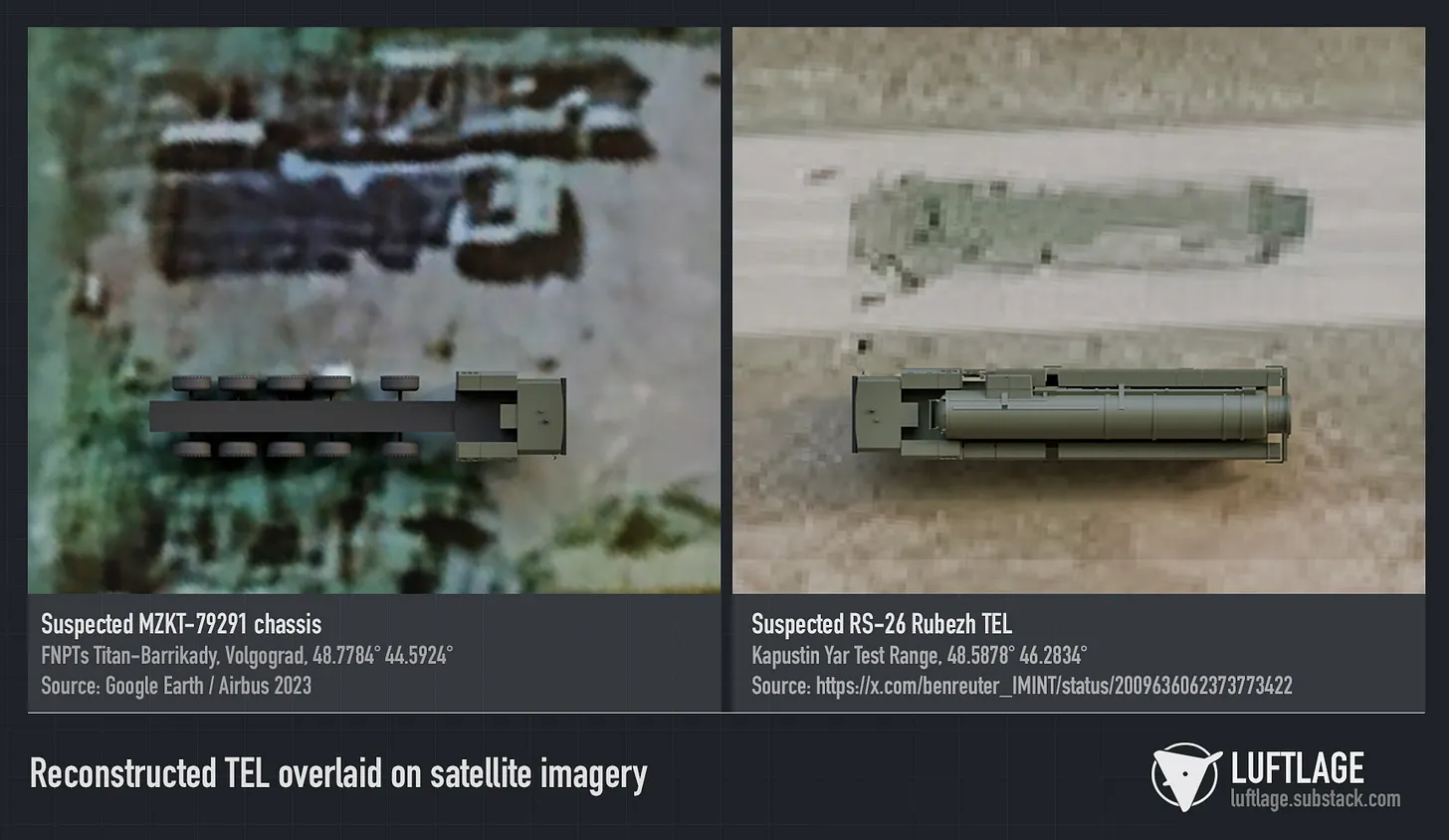
Comparing all this material provides an approximate estimate of the length of the mobile launcher itself at 16.5 meters, and the transport and launch container for the “Oreshnik” missile at only 13 meters.
If the 13-meter figure for the missile’s TPK length is correct, it is significantly smaller than the length of an MRBM that would theoretically consist of the first and second stages of the “Yars” ICBM. Therefore, as Hinz further writes, the TPK length parameter for the “Oreshnik” directly indicates that the second and third stages of the “Yars” became the foundation for this MRBM.
Also, based on photographs of some “Oreshnik” fragments published by our country, the researcher hypothesizes that the diameter of each of the 36 separating warheads is only 10-13 centimeters.
In turn, the reference to the Soviet “Skorost” project arises because, in the 1980s, Soviet designers used the second and third stages of the “Topol” ICBM as the basis for this MRBM. The only test launch of the “Skorost” MRBM was in 1985, it ended unsuccessfully, but the project was not continued, likely due to political reasons: in 1987, the US and the USSR concluded the INF Treaty, which stipulated the elimination of ground-launched medium-range missiles.
Ivan Kirichevsky, serviceman of the 413 SBS Regiment “Reid”, expert at Defense Express