
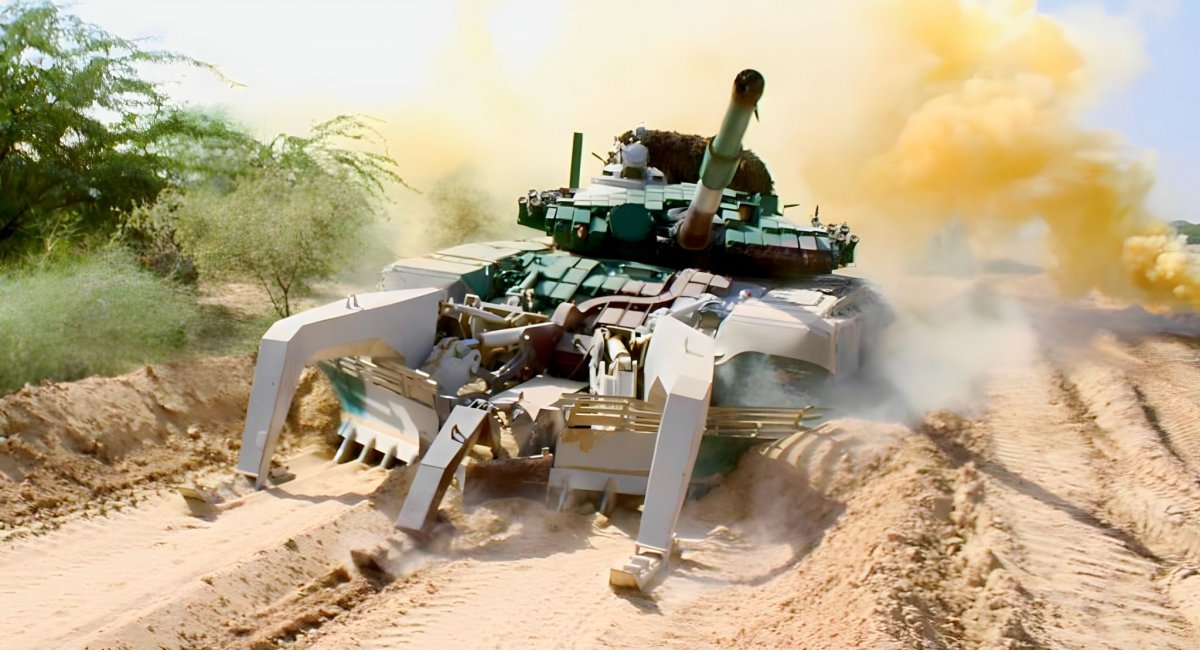
India decided back in 2021 to replace its outdated T-72s, but since then, among all the ideas on what to do with thousands of tanks, their transformation into unmanned ground combat vehicles appears to be the most intriguing, though it won’t be without risks for Ukraine.
India possesses one of the world’s largest tank fleets, totaling over 3.7 thousand vehicles. However, the backbone of this fleet still consists of approximately 2.4 thousand obsolete T-72M1s, which were adopted by the country in 1979 and manufactured under license domestically.
Among the concepts being considered is the possibility of converting these tanks into unmanned ground robotic systems. The Indian Ministry of Defence anticipates receiving suitable solutions as a result of the iDEX (Innovations for Defence Excellence) competition, within the framework of the ADITI 4.0 (Acing Development of Innovative Technologies) grant program.
“These outdated T-72s can be utilized intelligently by transforming them into autonomous armored fighting vehicle platforms to supplement manned tanks and implement an operational structure for the interaction of manned and unmanned systems, MUM-T (manned-unmanned teaming),” the competition requirements state. The conditions stipulate the need to deliver two fully tested prototype kits for converting the T-72 into an autonomous ground drone.
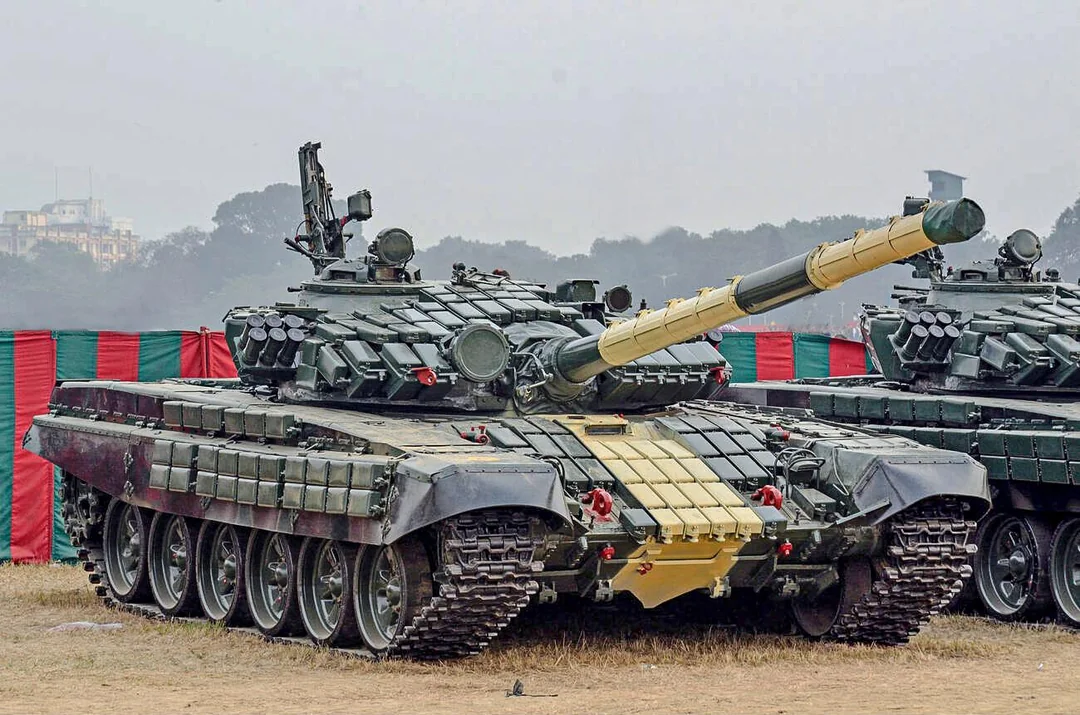
From Defense Express’s perspective, this is far from the Indian Ministry of Defence’s first attempt to find a solution for its T-72s. Back in 2021, Delhi launched the Future Ready Combat Vehicle (FRCV) project with plans to order 1.7 thousand new tanks. However, since then, future plans for Indian T-72s have oscillated between selling them and modernizing them to a “0 hours, 0 kilometers” state.
Against this backdrop, coupled with the key question of tank utility on the modern battlefield, the decision to transform outdated T-72s into unmanned ground combat vehicles appears potentially interesting, even though it necessitates converting an analog platform into a digital one.
However, if a solution is found and deemed effective, it could enable the Indian Army to convert up to 2.4 thousand T-72s into unmanned ground combat vehicles with extensive functionalities.
At the same time, Delhi’s decision regarding this program could potentially pose a threat to Ukraine due to India’s close cooperation with the Russian Federation. Specifically, any work on the T-72 is unlikely to be conducted without the Heavy Vehicles Factory (HVF) in Avadi, part of AVANI (Armoured Vehicles Nigam Limited), where T-72s and T-90s were assembled and are currently modernized.
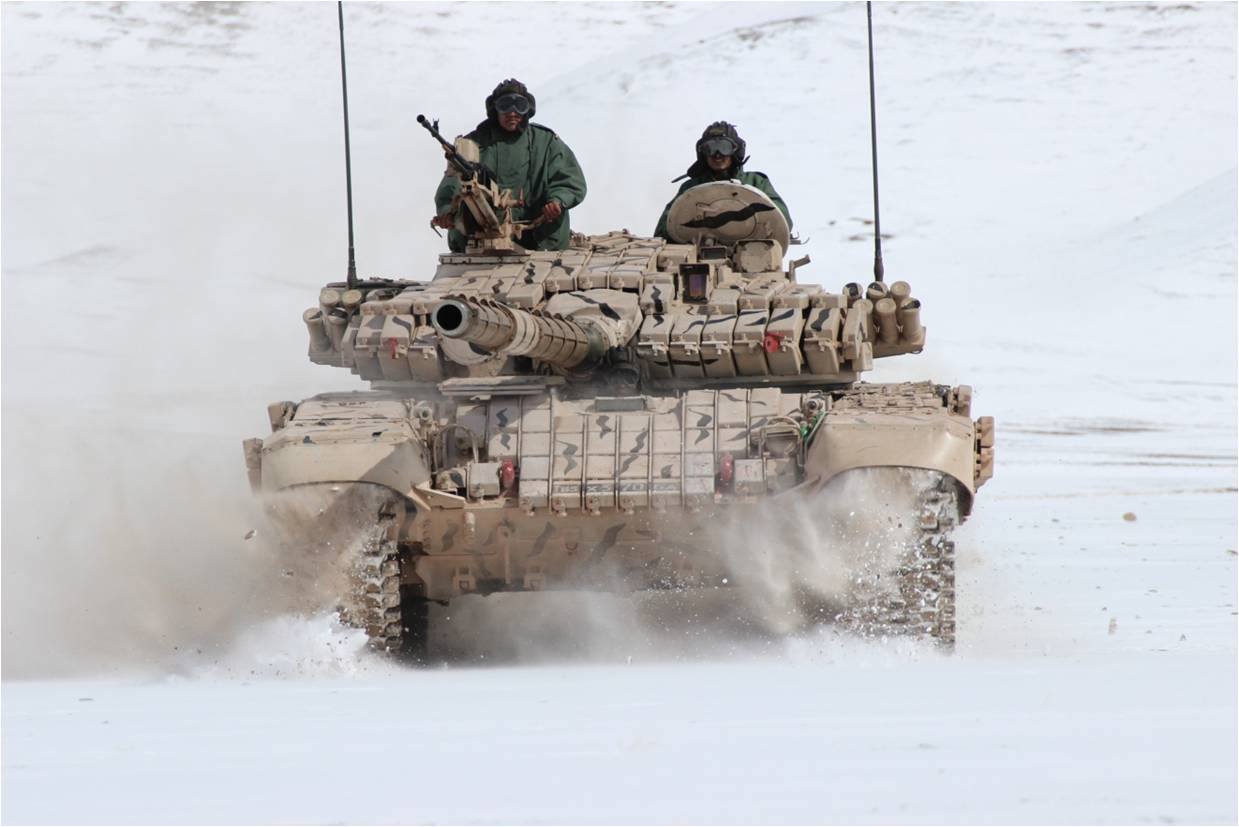
This factory maintains close ties with the Russian Federation; for instance, in 2025, 1000 engines were purchased for T-72 modernization with localization rights. This implies that any work on T-72s by Indian companies could involve Russian specialists, carrying associated risks.