
A global study has, for the first time, revealed the true number and weight of ants on our planet, and these staggering figures compel humanity to seriously reconsider who is actually the dominant species on Earth.
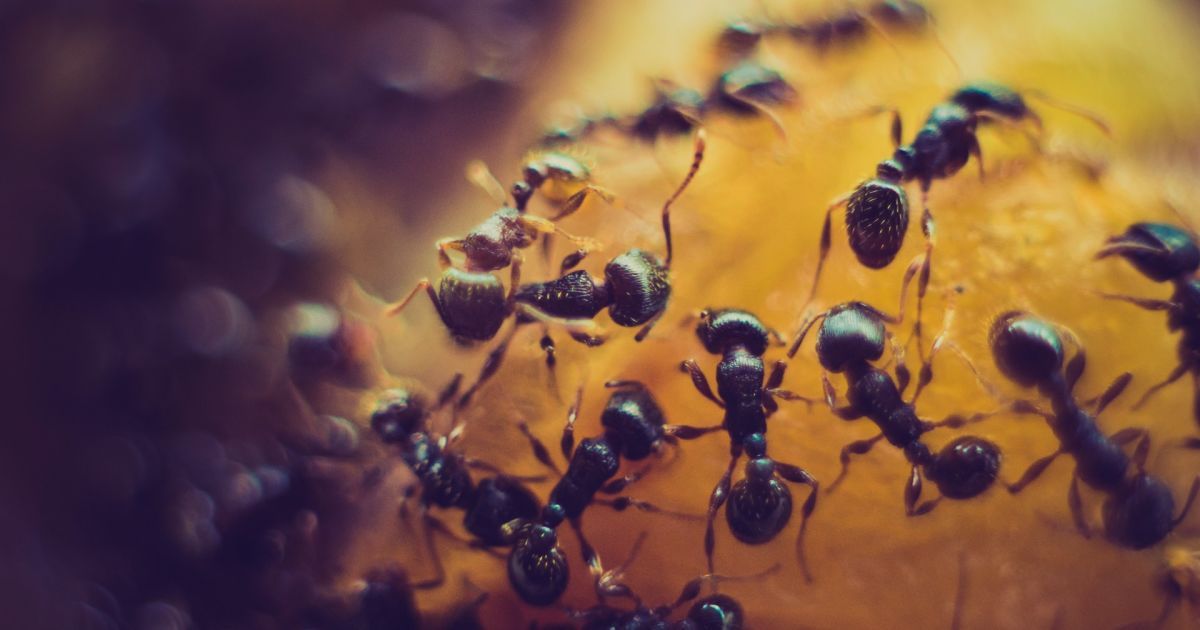
There are approximately 2.5 million ants for every person / © Unsplash
For the first time, researchers have conducted a global census of all ants on Earth and calculated their total mass. The astonishing figures obtained prove that these tiny creatures have a significantly greater impact on our planet than previously thought. It turns out that around 20 quadrillion of these minute insects coexist on Earth simultaneously, with their total mass considerably exceeding the combined weight of all wild birds and mammals combined.
This is reported in a large-scale study, the results of which were published in the authoritative scientific journal Proceedings of the National Academy of Sciences.
Incredible Numbers and Biomass Scales
To obtain precise figures, scientists analyzed 489 separate field studies from all continents except Antarctica. The calculations showed that the global population numbers 20 quadrillion individuals—a fantastic number with 15 zeros, which translates to about 2.5 million ants for every living human.
The total biomass of these tiny creatures amounts to approximately 12 megatons of dry carbon. This is equivalent to about one-fifth of the entire biomass of humanity, yet it substantially surpasses the aggregate weight of absolutely all wild mammals and birds on our planet.
If each ant were laid end to end, this living chain would stretch for 100 billion kilometers. Such a gigantic distance is approximately 670 times greater than the journey from the Earth to the Sun.
The Planet’s Chief Underground Engineers
Although Charles Darwin once considered earthworms to be the most important creatures in the world, modern data demonstrate the absolute leadership of ants. Every year, these insects move significantly more soil than worms, especially in the tropics, where they ceaselessly dig even during the dry season.
For instance, one mature leafcutter ant nest in Brazil contained about 40 tons of excavated soil and had a complex network of chambers exceeding 50 cubic meters in volume. Similar underground colonies can reach depths of eight meters and occupy an area the size of a large tennis court.
In general, ants bury fallen leaves, deeply aerate the soil, and accelerate the decomposition of organic matter. This is precisely why any climate model concerning soil carbon will be incomplete without accounting for the work of these tireless laborers.
An Ideal Food Source for Other Animals
The global census revealed that the distribution of ants on the planet is extremely uneven. About two-thirds of their global biomass is concentrated precisely in tropical forests and savannas, where just one hectare of Amazonian jungle can be home to eight million individuals.
The immense quantity and nutritional value of these insects led to some mammals evolving at least 12 times to feed exclusively on them after the extinction of the dinosaurs. Anteaters, aardvarks, pangolins, and echidnas modified their bodies and completely lost their teeth for this inexhaustible food source.
“Among themselves, they quietly restore the planet’s topsoil, one milligram at a time, and have been doing so since before primates existed to notice,” conclude the authors of the scientific material.
Recall that a common find in a backyard led scientists to discover a previously unknown interaction between ants, oaks, and wasps. Researchers say this could change perceptions of species interaction and the role of chemical signals in nature.
Comments Sort: New Old Popular Send