
It might seem that tiny insects can’t do much, but in reality, aphids can transform healthy plants into weakened and deformed ones within weeks. Twisted leaves, stunted growth, and sticky stems are the first signs that the garden needs help.
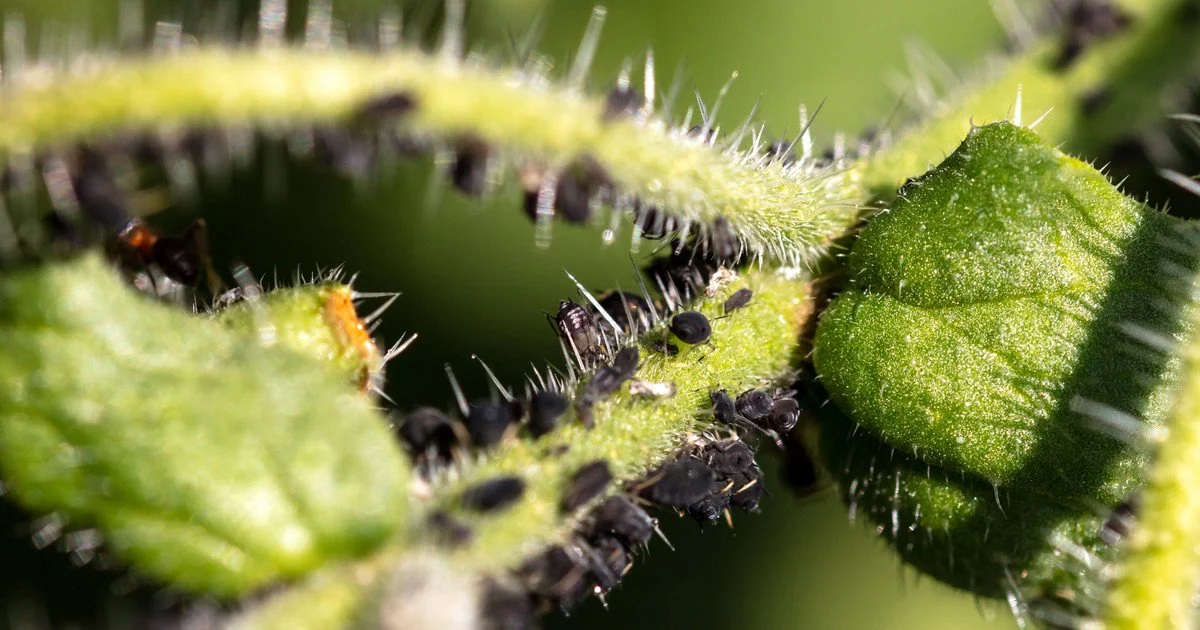
Aphids / © Credits
Anyone who has grown roses, vegetables, or ornamental plants at least once in their life knows this feeling of disappointment. Just yesterday the bush looked healthy and strong, and today the young shoots are covered with tiny green insects, the leaves begin to curl, and the plant itself seems to lose its vitality.
This is about aphids, often called green flies. Despite their miniature size, these pests can cause serious damage to the garden. Gardener Ish Kamran shared this information.
Aphids attach themselves to stems and leaves and suck the plant sap from them. Because of this, the plant weakens, young shoots become deformed, and the leaves gradually curl and dry out. If the problem is ignored, the pests can significantly slow down the plant’s development or even lead to its death. Fortunately, there are simple ways to combat them that do not require complex preparations and are accessible to almost every gardener.
Soapy Solution
Among all home methods, the expert highlights a soapy spray. Its advantage is its simplicity and speed of preparation, as only a few tablespoons of dish soap, a spray bottle, and water are needed for the solution.
The ingredients should be mixed, and the plants infested with aphids should be treated with the solution.
According to the gardener, this solution effectively destroys the insects’ outer shell – the exoskeleton, which leads to their death. At the same time, the product does not harm the plants themselves. This is why this method is considered one of the simplest and most effective for home use.
Aromatic Protection
Sometimes the best way to combat pests is not to destroy them, but simply to prevent them from reaching your favorite plants. For this, Ish Kamran recommends using the principle of companion planting. Aphids cannot tolerate the smell of certain plants, so they should be planted next to crops that are most often affected by pests. Among these natural protectors are:
-
Sage
-
Marigolds
-
Onions
-
Garlic
Their aroma creates a kind of natural barrier that helps repel unwanted guests.
The gardener pays special attention to marigolds. Although they also have a characteristic smell, aphids sometimes choose them, but even in this case, there is an advantage. Marigolds can act as a trap for pests. Insects concentrate on these flowers, leaving vegetables, fruit crops, and ornamental plants less damaged.
Water Under Pressure
If aphids are already actively attacking plants, and their numbers are rapidly increasing, sometimes ordinary water is enough. A powerful stream from a hose helps literally wash the pests off the leaves and stems.
This method works well in the initial stages of infestation or as a supplement to other control methods. The main thing is to carry out the procedure carefully to avoid damaging the delicate young shoots.
Ladybugs
In modern gardening, biological pest control is becoming increasingly popular. Ish Kamran advises paying attention to ladybugs – natural enemies of aphids. These brightly colored insects not only participate in plant pollination but also actively hunt these pests. For them, they are one of the main sources of food.
In many countries, ladybugs are even specifically purchased and released into gardens and greenhouses to naturally control pest populations. This method allows for a reduction in the use of chemical preparations and maintains a healthy balance in the garden ecosystem.
Aphids seem like a trifle only at first glance. In reality, these insects multiply extremely quickly. A few individuals can turn into a whole colony in a short time, which will begin to suck the sap from young shoots and leaves. That is why it is important to regularly inspect plants, especially in spring and early summer when pests are most active. After all, the sooner the problem is noticed, the easier it will be to solve it without serious losses for the garden.
Comments Sort: New Old Popular Send