
This is not just a criminal story, but the only case of a passenger plane hijacking in US history that has never been solved, and its perpetrator literally vanished into the darkness over the forests of Washington State. More than half a century later, the case remains a symbol of the perfect crime that changed aviation security and gave rise to dozens of theories, hundreds of suspects, and thousands of pages of investigations.
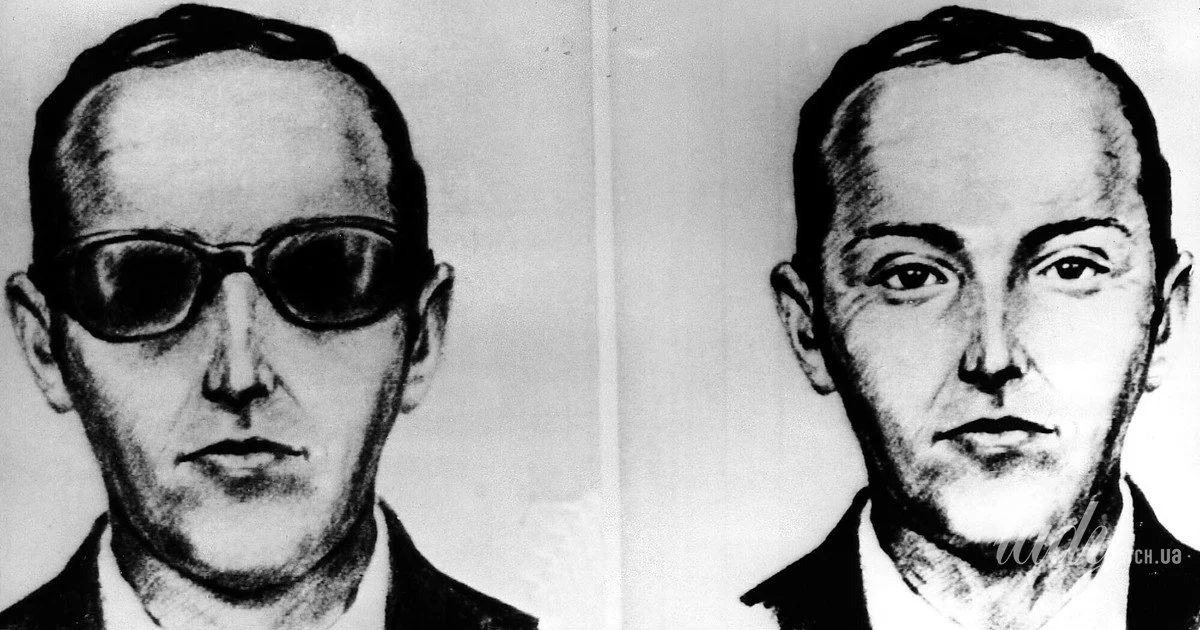
D. B. Cooper / © Associated Press
Contents
On November 24, 1971, on the eve of Thanksgiving, an unremarkable middle-aged man appeared at the Portland airport. He introduced himself as “Dan Cooper,” bought a ticket for a flight to Seattle, and paid in cash – about $20. It was a short domestic flight lasting approximately 30-40 minutes.
The passenger took a seat in the rear of the cabin, by the aisle. Witnesses later described him as a calm, polite man in a business suit with a white shirt, black tie, dark glasses, and a briefcase. His appearance was so “ordinary” that he aroused no suspicion from the crew or passengers.
After takeoff, he ordered a bourbon with soda, and according to some accounts, several servings during the flight, and smoked cigarettes. The plane had been airborne for about 10-15 minutes when he handed a note to a flight attendant, according to BBC materials.
It was from this moment that what would later enter aviation history as one of the most audacious and mysterious crimes of the 20th century began – a plane hijacking that would end with a jump into the darkness and the man’s inexplicable disappearance.
The Note That Changed Everything
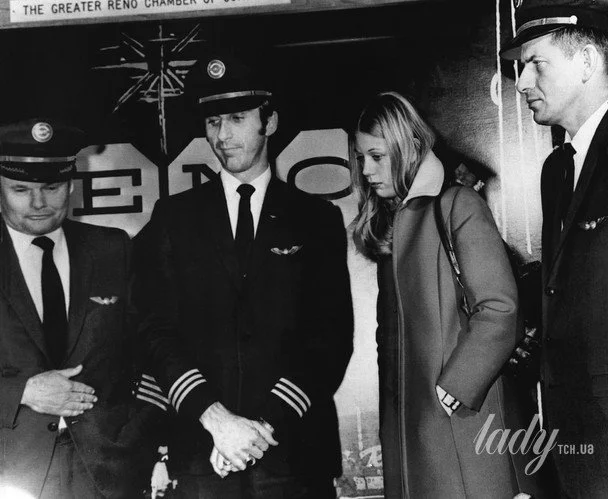
Flight crew / © Associated Press
According to Britannica, around 3:00 PM, the passenger handed a note to a flight attendant. Initially, she took it as something unserious, according to some accounts, as an attempt to get acquainted or pass on a phone number. However, the man insisted that she read it carefully. The note contained a short, clear message:
“There is a bomb in my briefcase. I want you to sit next to me.”
After that, he confirmed the seriousness of his words by opening his briefcase and showing a device that looked like a homemade explosive – wires, electrical tape, batteries, and red cylinders that could resemble dynamite. Investigators later noted that the device had not been tested for actual functionality but looked convincing enough for the crew to comply with the perpetrator without resistance.
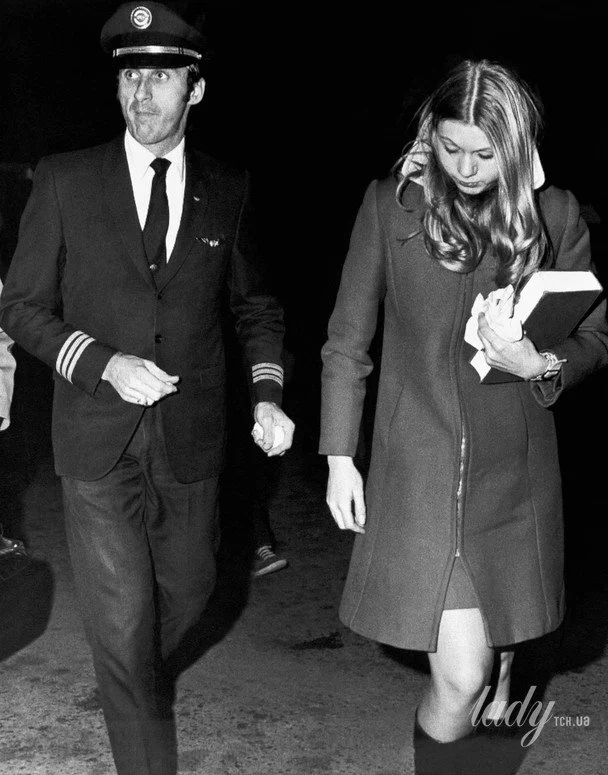
Flight crew / © Associated Press
After the demonstration, he dictated his demands, which the flight attendant relayed to the crew and pilots:
-
$200,000 in $20 bills
-
four parachutes (two main and two reserve)
-
refueling of the plane in Seattle after landing
Later, he further clarified the flight conditions, namely, a low altitude of about 3 meters, moderate speed, and deployed flaps and landing gear to allow for the opening of the rear exit.
Despite the threat, he behaved extremely calmly, did not raise his voice, showed no aggression, and gave detailed instructions. It was this cold, controlled demeanor that became one of the reasons the crew perceived the situation as real and fully complied with his demands.
The Hijacker’s First Deal
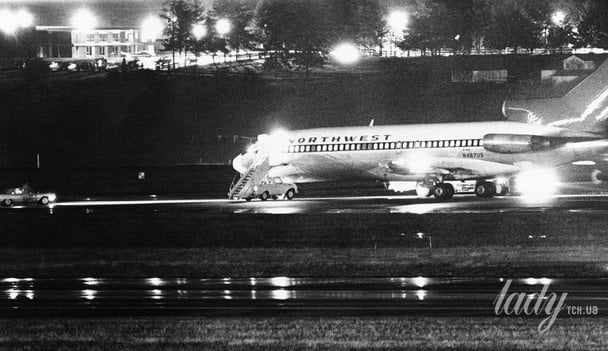
The hijacked plane, refuelling on the tarmac at Seattle-Tacoma International Airport / © Associated Press
When the plane landed in Seattle, police and FBI agents quickly complied with his demands. The passengers, 36 in total, were safely evacuated. Part of the crew was also replaced for the onward flight, but several crew members remained on board with the hijacker, including the pilots and the flight engineer.
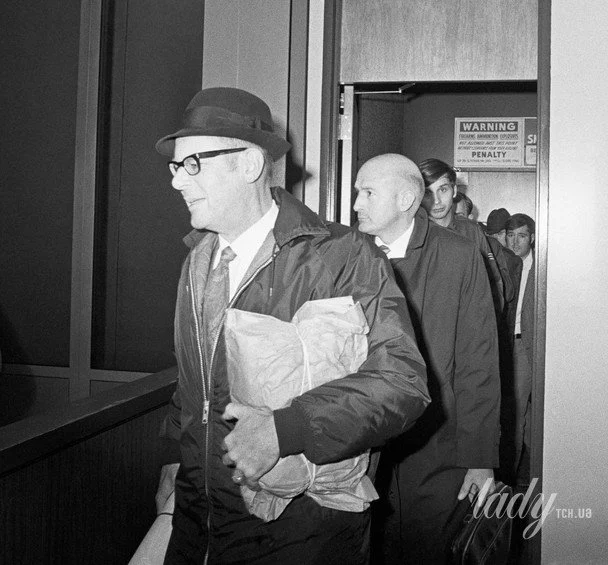
Airplane passengers / © Associated Press
Here, his main trait – complete control over the situation – was particularly evident. He not only demanded money but also meticulously regulated flight parameters, demonstrating knowledge of the aircraft’s characteristics and navigation. His instructions included:
-
flight at an altitude not exceeding approximately 3 meters
-
speed of about 170–200 knots (approximately 315–370 km/h)
-
deployed flaps and landing gear for stable low-altitude flight
-
rear exit constantly lowered during flight
After receiving the ransom – $200,000 in $20 bills and four parachutes – he allowed the plane to take off again. His initial demand was a flight towards Mexico, but the crew explained that there was not enough fuel for such a route. After this, he agreed to an intermediate route with refueling, including a stop in the Reno area, Nevada.
It was after this second takeoff that the final stage of events began, culminating in his jump into the night sky over the northwestern United States.
The Final Flight
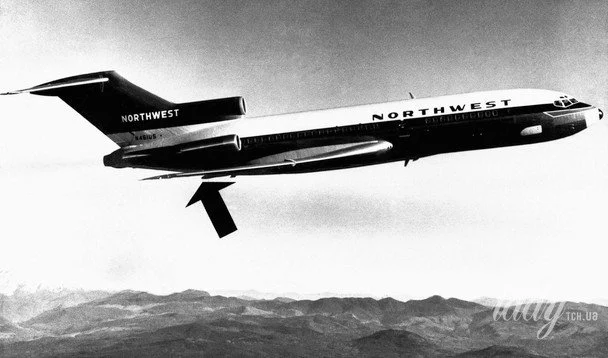
Boeing 727 / © Associated Press
Around 7:40 PM, the plane took off again. It was a Boeing 727 passenger jet, which had a unique design feature – retractable rear stairs. This system theoretically allowed for an exit in flight, although the crew and aviation engineers considered it extremely dangerous.
After takeoff, the plane proceeded through the night sky over the northwestern United States. Only the crew members and the hijacker himself remained in the cabin. He continued to follow his instructions: the cabin remained darkened, the landing gear was down, and the speed and altitude were minimal for stable flight.
Between 8:00 PM and 8:15 PM, as the plane flew over the southern Washington area, near the Cascade Mountains, the crew noticed a change in cabin pressure and movement in the tail section.
At this moment, according to the FBI’s reconstruction, the pivotal event occurred: Cooper opened the rear stairs of the aircraft, secured the money and one of the parachutes to himself, and jumped into complete darkness over the forested area during rain and strong winds.
The outside temperature was well below freezing at altitude, and wind speeds reached dangerous levels, making a precise landing extremely difficult even for an experienced skydiver.
Despite extensive searches that began almost immediately after the crew’s report, no trace of the man was found – no body, no equipment, no confirmed evidence of his landing site. It was this absence of any physical clues that made his disappearance one of the most famous unsolved mysteries in aviation history.
The FBI’s Biggest Hunt
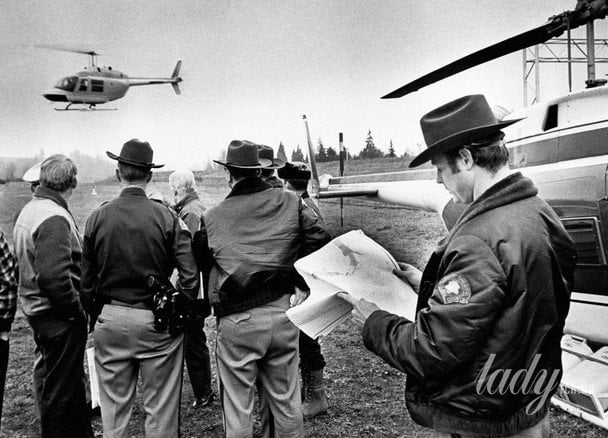
A helicopter takes off from a search headquarters to survey the area in Woodland where hijacker D. B. Cooper may have parachuted / © Associated Press
The FBI launched a large-scale operation codenamed NORJAK (“Northwest Hijacking”) almost immediately after the crew reported the hijacker’s disappearance from the plane. The investigation became one of the largest in the history of aviation crimes in the United States. Special agents, aviation experts, military units, and air navigation analysts were involved.
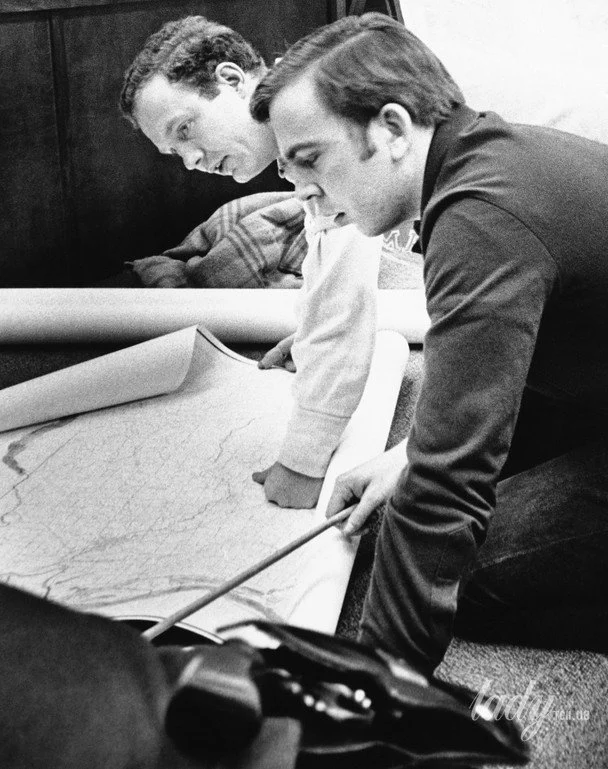
Search for the hijacker / © Associated Press
Popular Mechanics reported that investigators reviewed hundreds of potential suspects in the first few months, interviewed the crew, passengers, and numerous ground witnesses, meticulously reconstructed the flight path of the Boeing 727, analyzed weather conditions, wind speed, and possible falling trajectories, conducted experimental jumps by skydivers to assess survival probability and potential landing zones, and used aviation modeling and air mass drift maps.
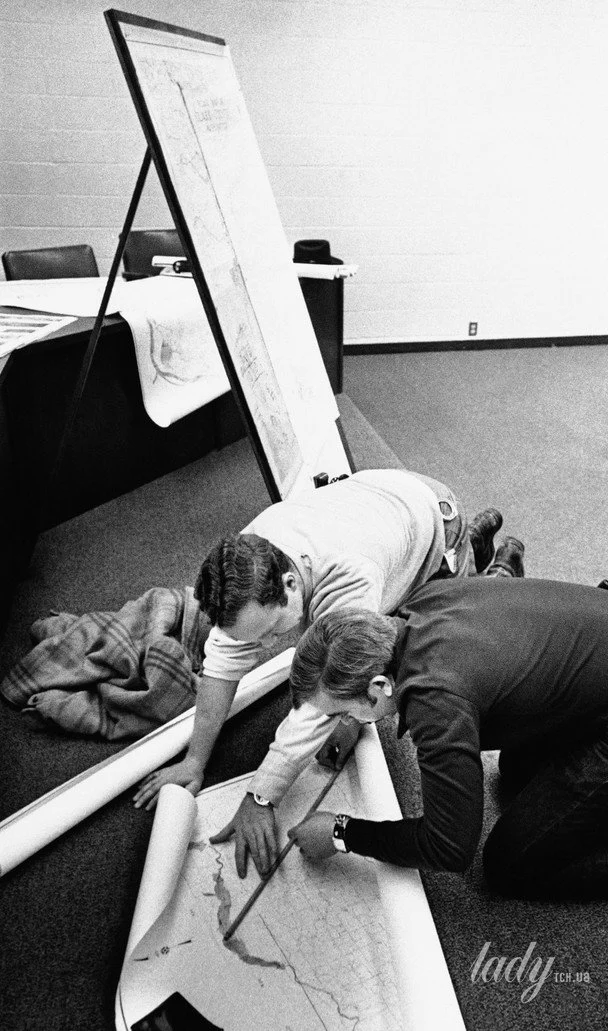
Search for the hijacker / © Associated Press
In the first five years of the investigation, over 800 suspects were officially processed, and the total number of individuals who came into the investigation’s purview over the decades later exceeded a thousand.
Despite the scale and duration of the operation, none of the leads yielded a definitive result. Neither the hijacker’s identity, nor the exact landing site, nor his fate after the jump could be determined.
The Main Mystery
There are three main theories about what happened, as reported by EBSCO.
He Died During the Jump
This is the most common theory among NORJAK investigators and analysts. The reasons for its existence include: a night jump in complete darkness and rain, strong winds in the Cascade Mountains area, the absence of a steerable parachute (likely an “unsteerable” or partially steerable type), a forested, mountainous terrain with a high risk of injury or death, and the absence of any physical traces such as a body, equipment, or clothing.
An additional argument for the investigation: the jump point could have been shifted due to calculation errors or flight conditions, further complicating survival.
He Survived and Disappeared
This theory is popular among amateur researchers and some journalists. Its proponents believe he might have had skydiving experience or military training, had studied the route and weather in advance, knew the specifics of the Boeing 727, including the possibility of safely opening the rear exit, had a prepared landing site or accomplices on the ground, and might have changed his identity after the escape and used the ransom money.
However, what does not support this theory is that only a portion of the money, $5,800, was found in 1980, and there are no confirmed financial traces of the remaining amount.
He Had Accomplices
A less popular but still considered theory. Its arguments: precise coordination of demands (money, parachutes, flight parameters), possible knowledge of the aircraft’s technical specifications, and potential organization of an escape after landing.
However, the investigation considers this theory weaker because the hijacker’s behavior indicated complete control by one person, no external contact was detected during the incident, and the instructions were improvised and adapted to the crew’s reactions.
The FBI’s official position remains neutral, stating that none of the three theories has been proven. They all remain theoretical scenarios, as the key factor in the case – the absence of a body and the exact landing site – still prevents the truth from being established.
The Discovery of the Money in 1980
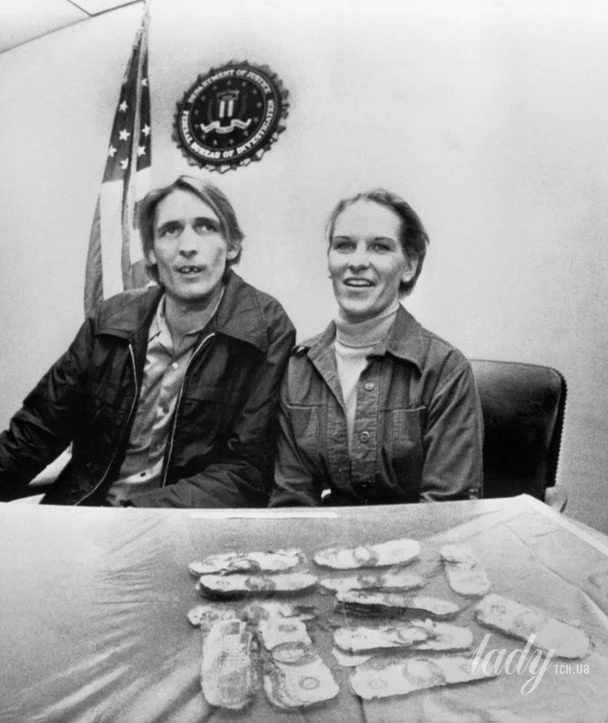
Howard and Patricia Ingram of Vancouver, sitting with thousands of dollars that the FBI says were paid to hijacker D. B. Cooper / © Associated Press
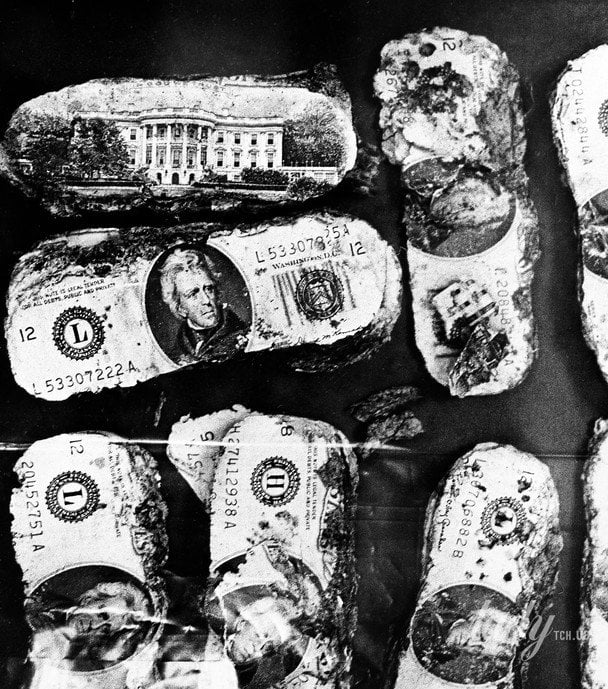
Part of the ransom money / © Associated Press
Nine years after the hijacking, in 1980, an eight-year-old boy, Brian Ingram, while vacationing with his family on the banks of the Columbia River near Vancouver, Washington, accidentally discovered three bundles of decaying $20 bills, totaling about $5,800.
After verification, it was determined that the serial numbers of the bills matched exactly a portion of the ransom paid to the hijacker during the Boeing 727 incident. This discovery became the only confirmed physical trace of the money from the entire hijacking.

FBI agents search the sand for additional money or evidence / © Associated Press
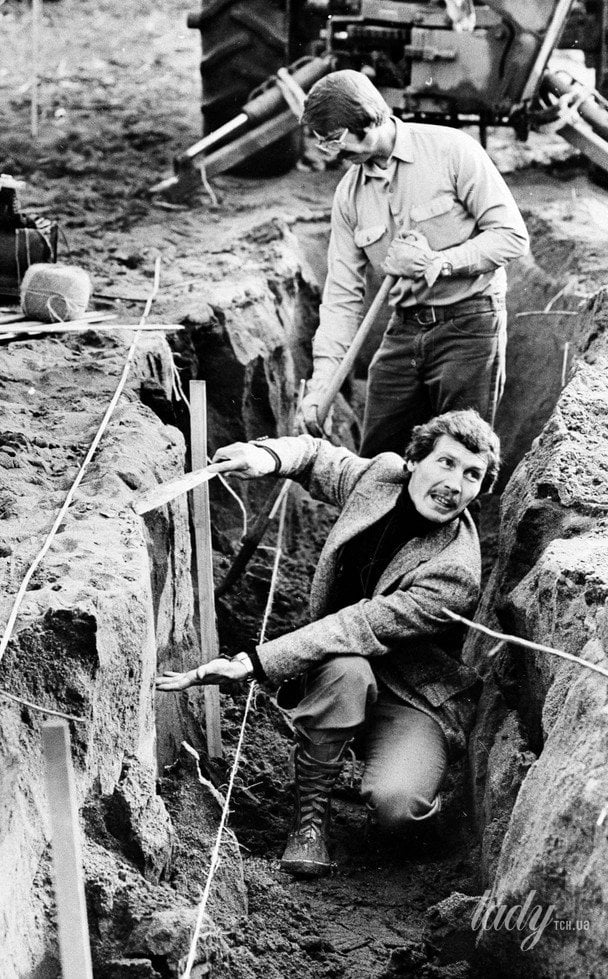
Geologist Leonard Palmer shows a layer of sand from the bottom of the Columbia River near where part of the hijack ransom was found in 1980. The FBI later excavated here in search of other money / © Associated Press
However, even this discovery did not provide a definitive answer. The investigation considered several possible explanations, such as the money being lost or scattered during a failed landing, part of the ransom being buried or accidentally carried into the river, or the bills remaining from the jump and moving downstream over time.
For the FBI, this finding only confirmed that at least a portion of the ransom had entered the environment. However, it did not prove whether the hijacker survived or died immediately after the jump, and this uncertainty remains the key mystery of the case.
Suspects
Over the decades, hundreds of candidates have emerged, and the investigation has considered over a thousand potential individuals, as reported by Noiser, but only a small number have become publicly known “classic” suspects.
Richard McCoy Jr.
A US Army veteran and experienced skydiver who, in 1972, carried out a nearly identical hijacking of a Boeing 727, demanding ransom and jumping from the rear exit. This incident led him to be considered the main suspect for a long time.
However, the investigation revealed significant discrepancies in his appearance and details of his behavior, so the FBI has not officially confirmed him as Cooper.
Kenneth Christiansen
A former employee of Northwest Orient Airlines who worked as a mechanic, flight attendant, and steward. He had experience in skydiving and military training.
After his death, his family made statements about possible indirect confessions, but no direct evidence or confirmed links to the case were found.
Sheridan Peterson
A former Boeing employee who had access to the technical documentation of the Boeing 727 and understood the specifics of its design, including the rear stairs from which the jump was made.
At the same time, he did not fully match the physical description of the suspect, particularly regarding eye color and some crew testimonies.
Robert Rackstraw
A former military pilot and skydiver with a criminal record (fraud, document forgery, other crimes). His candidacy was actively promoted by independent researchers, especially after publications in 2016.
Despite sensational theories, the FBI has not confirmed his involvement, and no evidence linking him to the ransom or the jump site has been found.
None of these suspects have been officially proven to be the hijacker. As of today, the case remains unsolved, and the identity of the man known as D. B. Cooper remains unknown, despite decades of investigation and numerous attempts at identification.
Physical Evidence
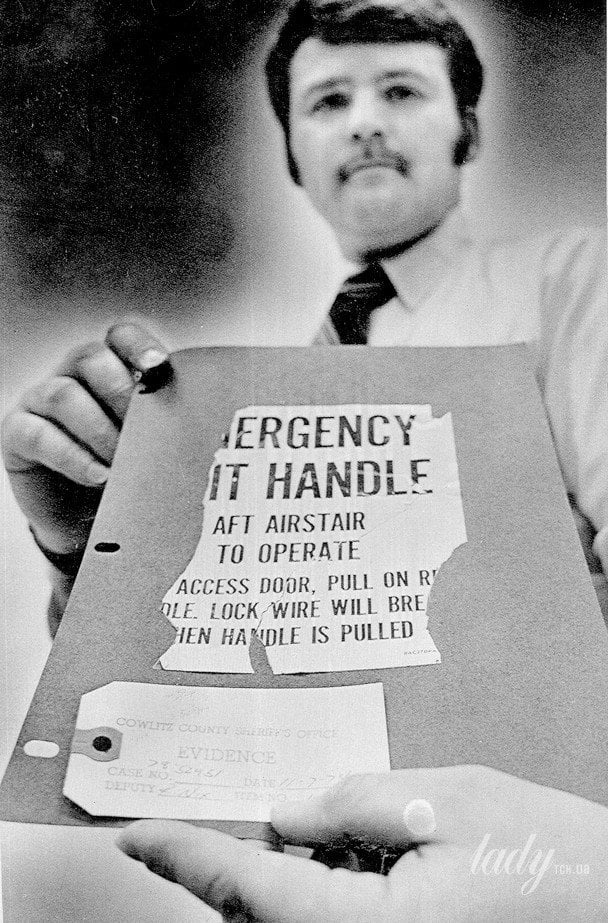
Detective Bob Nix demonstrates a placard with instructions for exiting a Boeing 727, found by a hunter near the town of Toutle and missing with D. B. Cooper / © Associated Press
Among the few pieces of physical evidence in the case are:
-
cigarette butts
-
hair from his seat
-
a clip-on tie left by the hijacker in the cabin
The latter became the most important physical evidence in the entire case. The tie was repeatedly examined over the decades, and modern microanalysis methods provided new results.
As reported by The U.S. National Archives and Records, under an electron microscope, tens of thousands of microparticles were found on it, over 100,000 in various analyses, including industrial metals and minerals. Among them: titanium, aluminum, copper, zinc, as well as rare combinations of elements, including traces of bismuth, zirconium, tungsten, and cobalt.
These findings led to the hypothesis that the hijacker might have had contact with industrial production, such as metalworking, mechanical engineering, or the aerospace industry. The titanium attracted particular attention from researchers, as it was actively used in aviation and specialized production at the time, but was almost never found in everyday life.
Subsequent modern analyses also confirmed particles characteristic of metal processing and high-temperature industrial processes, including tungsten-cobalt alloys used in cutting tools.
At the same time, it is important to understand that none of these elements are a unique “fingerprint” of a specific person or company. They only indicate the possible environment in which the hijacker might have been before or during the flight.
Some studies even suggest that some particles could have accumulated on the tie over years, as it was likely worn for a long time and not cleaned, which complicates the precise interpretation of the evidence.
Despite decades of analysis, none of this evidence has led to the direct identification of the hijacker. The entire physical evidence base remains in the FBI’s custody, and the main part of the materials is available through the official case file, which is periodically updated with newly declassified documents.
Why He Became a Legend
Unlike most criminals, Cooper did not kill or injure anyone. He acted calmly, methodically, and without excessive aggression throughout the incident, disappeared without a confirmed trace after jumping from the Boeing 727, leaving behind only a limited amount of physical evidence and unanswered questions for the investigation, reports History.
It is also important that he did not make political demands during the event and had no ideological motivation, which distinguishes him from many other skyjackers of that time. His demands were purely material and pragmatic – money, parachutes, and specific flight conditions.
Because of this, Cooper’s image gradually transcended the criminal case. In popular culture, he gradually transformed into a symbol of the “perfect crime without victims” – a figure who simultaneously inspires admiration and doubt. He began to be portrayed as a cunning, cold-blooded anti-hero who managed to exploit the weaknesses of the early 1970s aviation system.
Consequences for Aviation
Following this incident, aviation security in the United States underwent systemic changes, and the FBI case became one of the catalysts for a new era of aviation control. For example, a mechanical safety device has now been installed on the rear stairs of the Boeing 727 – the so-called “Cooper vane,” which physically blocks the stairs from opening in flight. Access control for passengers boarding aircraft has been tightened, including document checks and ticket-person verification. Procedures for transporting and controlling luggage have been changed to reduce the risk of weapons or explosives being brought aboard. Mandatory aviation screening of passengers and carry-on baggage has been gradually introduced, which has become a standard throughout the industry over time.
In conclusion, one unknown hijacker not only left behind one of the most famous unsolved cases in aviation history but also initiated a long-term transformation of the entire US aviation security system.
Case Closure and What Remains
In 2016, the FBI officially suspended active investigation, stating that there was insufficient new evidence. However, the case is still not closed in the public imagination, and every year enthusiasts, researchers, and amateurs meet at conferences to discuss new hypotheses, the most famous of which is CooperCon.
Who knows, maybe he died that night in the forests of Washington, maybe he lived another life under a different name, or maybe it is the very lack of an answer that made him immortal.
Comments Sort: New Old Popular Send