
The budget deficit of the Russian Federation has already surpassed critical forecasts for 2026. Despite this, Putin insists on continuing the aggression and demands new funds for the army.
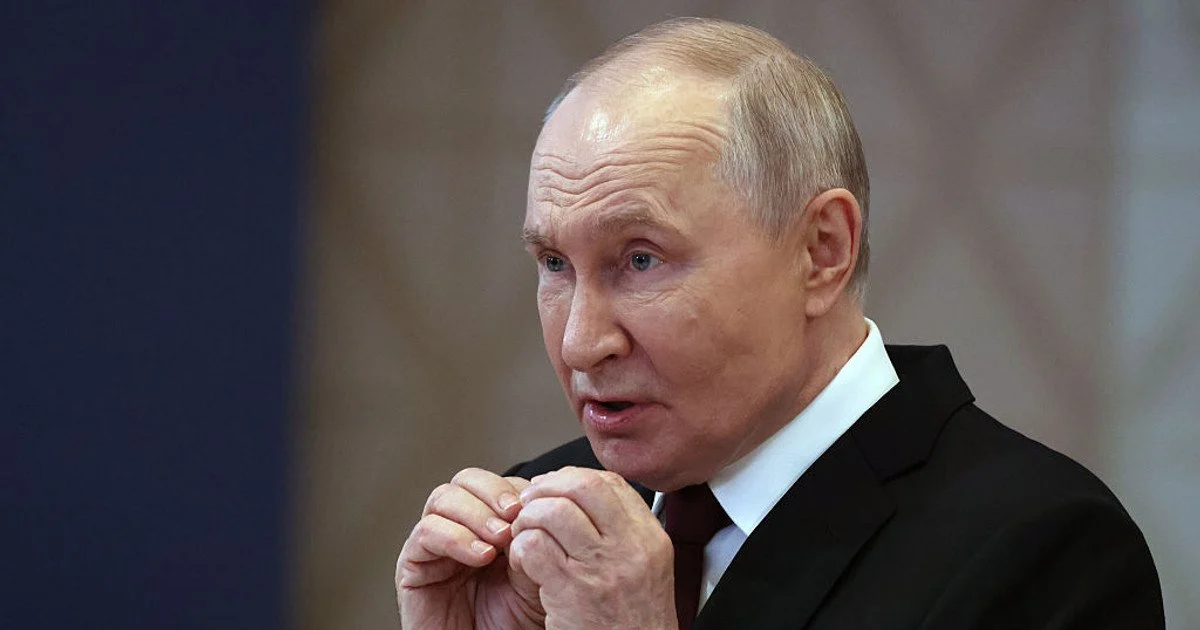
President of Russia Vladimir Putin / © Getty Images
The financial bloc of the Kremlin is sounding the alarm over the unbearable burden of military expenditures, which is devastating Russia. However, President Vladimir Putin consciously ignores the warnings and has instructed the Ministry of Finance to seek ways to cut spending in non-military sectors.
This is stated in a report by the Institute for the Study of War (ISW).
Putin does not agree to reduce defense spending and end the war against Ukraine, despite growing concerns from the economic bloc of the Russian government regarding the critical strain on the country’s economy.
Putin is being urged to reduce military spending
As reported by Bloomberg, citing sources and documents, representatives of the Ministry of Finance and the Central Bank of Russia have warned Putin that the current level of military spending is becoming excessively burdensome for the budget and could lead to a significant increase in the deficit.
According to sources, financial officials proposed reducing defense expenditures. At the same time, some representatives of the Russian Ministry of Defense and the Kremlin are opposing this decision, arguing it poses risks to enterprises whose operations depend on military orders. Furthermore, the Ministry of Defense, according to the publication’s interlocutors, insists on allocating additional funds.
Bloomberg sources note that Putin has been aware of the budget problems since last year. Nevertheless, the dictator has instructed the Ministry of Finance to primarily seek reserves for expenditure cuts in civilian sectors. It is also reported that during the preparation of the budget for 2026, Russian officials allowed for the possibility of a deficit of 1.2-1.5 trillion rubles (approximately $16.5-21 billion) in the second half of the year, anticipating the end of the war and a corresponding reduction in defense spending.
The agency’s interlocutors emphasize that additional revenue from oil exports, linked to the situation in the Middle East, is unlikely to significantly improve the situation. For this to happen, the price of oil would have to remain above $100 per barrel for at least a year. However, even such a scenario, according to them, would not resolve the systemic problems of the Russian economy, which negatively impact growth rates, inflation, and the banking sector.
As early as April 9, the Ministry of Finance of the Russian Federation reported that the budget deficit for the first quarter of 2026 reached 4.58 trillion rubles (approximately $63.5 billion). This figure already exceeded the planned deficit for the entire year, which was 3.79 trillion rubles (about $52.5 billion).
Why doesn’t Putin want to cut military spending?
“Putin’s reluctance to cut defense spending and wind down military efforts indicates that he believes it is possible to win the war in the short to medium term, and is also convinced that the Russian economy can withstand the strain until then,” the analysts explained.
Meanwhile, ISW experts previously concluded that the Russian dictator likely has a distorted perception of the actual course of hostilities in Ukraine due to exaggerated reports from the top military leadership of the Russian Federation.
According to the analysts, this perception of the situation may explain Putin’s insistence on maintaining high military spending and continuing the war to achieve his goals through military means.
“In reality, Putin faces a different problem: reducing military spending would likely jeopardize certain front lines amidst Ukrainian medium-range strikes and counterattacks, and would also allow Ukrainian forces to build on their recent battlefield successes,” the ISW report states.
Incidentally, the Russian economy is showing a significant slowdown. The main reasons are high credit rates, Western sanctions, and Ukrainian drone strikes on refineries and ports, which have disabled a quarter of the oil refining capacity. Representatives of Russian businesses and elites are convinced that the only effective way to save the economy is to end the war against Ukraine. Experts predict prolonged stagnation for the Russian Federation, from which recovery is possible only with a powerful external impetus, particularly the easing of sanctions.
Comments Sort: New Old Popular Send