
For decades, Moscow was Yerevan’s primary security partner, but this is now changing.
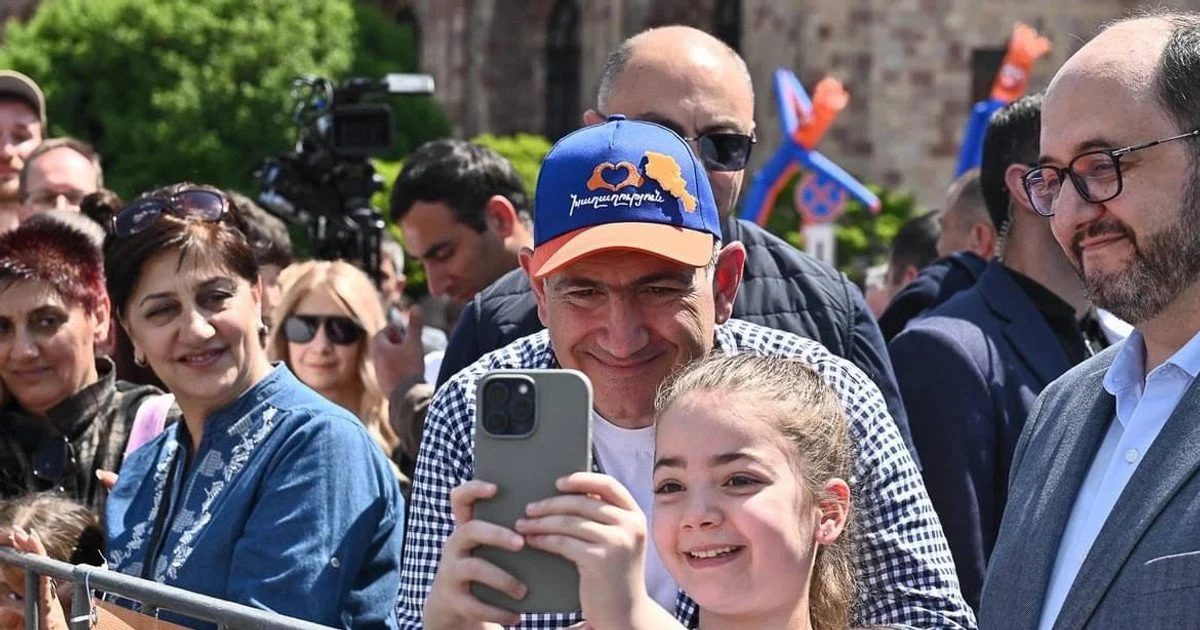
Pashinyan actively used social media during the 2026 election campaign. Photo: facebook.com/nikol.pashinyan
On June 7, Armenia is electing a new parliament. The 2026 parliamentary elections are considered by many observers not just as another political campaign, but as a vote for the country’s future direction. After the loss of Nagorno-Karabakh and the near-complete erosion of trust in the Russian security system, Yerevan is increasingly demonstrating a course towards closer ties with the European Union.
That Moscow is closely monitoring these developments is evidenced by Vladimir Putin’s recent statements. Commenting on Armenia’s deepening relations with the EU, he effectively linked the war against Ukraine to Kyiv’s European choice and hinted at the possibility of a similar scenario for other post-Soviet states.
Almost immediately, a similar signal came from Minsk. Alexander Lukashenko urged Armenians to be cautious about supporting European integration, stating that “everything began just like that” in Ukraine.
For Yerevan, this served as another reminder that the Kremlin perceives any move towards Europe as a threat to its own influence in the South Caucasus.
Meanwhile, Brussels is demonstrating a completely different approach. Recently, the European Union allocated €2.2 million to Armenia to support the visa liberalization process. The funds are intended for reforms in border control, law enforcement agencies, and migration management. The EU Ambassador to Armenia emphasized that relations between Brussels and Yerevan are undergoing an unprecedented stage of development.
TSN.ua spoke in Yerevan with politicians and experts to understand the extent to which this course is supported by Armenian society itself and how Russia has become an unreliable ally.
Why Armenia Started to Distance Itself from Russia
For decades, Moscow was Yerevan’s primary security partner. Armenia was a member of the Collective Security Treaty Organization (CSTO), a Russian military base is located on its territory, and a significant portion of society viewed Russia as the key guarantor of protection against external threats.
However, the war for Karabakh and subsequent events have cast doubt on this model.
“Formally, we are still members of the CSTO. But in practice, there is no interaction. We do not send our representatives to their meetings. We do not pay annual dues to the organization. We do not maintain contact with it,” explains Alexander Iskandaryan, director of the Caucasus Institute, noting that after 2020, Armenian society increasingly began to question the real value of allied relations with Moscow.
“Pashinyan calls it ‘frozen relations.’ God knows what that means, as there is formally no such status as ‘frozen relations’,” he added.
According to the expert, for many residents of Armenia, Europe today is less a political project and more a symbol of a higher quality of life and modernity.
“Pro-European sentiments in Armenia are becoming increasingly popular. This is evident from opinion poll results; it’s almost obvious, perhaps, as everywhere in the post-Soviet space. When they say ‘European’ in the post-Soviet space, they mean something good, high-quality, free. It’s not just about freedom, democracy, or elections. It’s also about cars, goods, about everything in general,” Alexander Iskandaryan explained with a simple example.
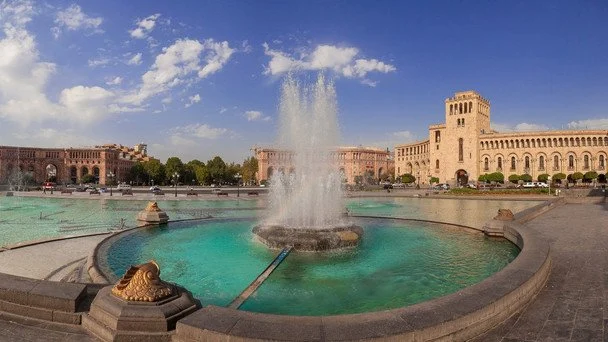
Republic Square is the central and most famous square in Yerevan. Photo: visityerevan.am
Iskandaryan believes that the key moment was not even the 2020 war itself, but the events of 2023. After the hostilities in Karabakh ended, Russian “peacekeepers” were stationed there. Many Armenians perceived this as a guarantee that the region’s population would be protected. More than 120,000 people were forced to leave the region and relocate to Armenia.
In the West, there is often an impression that Prime Minister Nikol Pashinyan is independently steering the country towards Europe. However, many Armenian experts see the situation differently. In their opinion, society began to change its mood faster than the political elite. And the authorities were forced to respond to the new public demand.
One of the consequences of this process has been the intensification of security cooperation with the European Union.
“For example, a European monitoring mission is operating on the border. It’s only about 200 unarmed people with only cars at their disposal. But their mere presence has led to fewer risks on the border – simply because they are there,” explains Iskandaryan, recalling that a few years ago, such a situation would have seemed almost impossible.
France has become one of Armenia’s main defense partners in recent years, and India is actively increasing its arms exports to the country.
All this indicates a gradual diversification of security policy. However, it is too early to talk about a complete break with Russia. Instead, another word is heard increasingly often – diversification.
As the director of the Caucasus Institute added: “For decades, Armenia’s choice was not to make a choice. To somehow balance, because in reality, you have no real choice.”
Visa-Free Travel as a Clear and Concrete Goal
The issue of visa-free travel with the European Union holds an increasingly important place in the current election campaign. The ability to travel to Europe without lengthy visa application procedures is an argument that even people far from politics can appreciate. Nikol Pashinyan’s government well understands this public demand.
During a conversation with TSN, Sargis Khandanyan, head of the parliamentary committee on foreign relations, essentially confirmed that the visa-free issue has already become part of the official election program of the ruling party “Civil Contract.” “This is our promise to the people. And I believe it is entirely realistic to fulfill,” he shared.
Khandanyan is convinced that the main responsibility lies with the country, not just the EU. “At this moment, everything depends on us,” he says confidently.
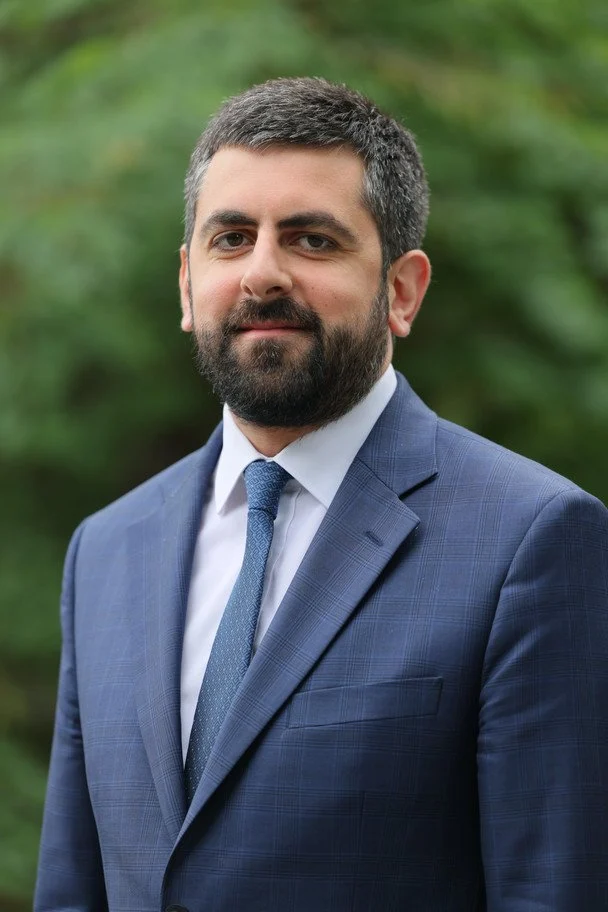
Sargis Khandanyan is a representative of a new generation of Armenian politicians who openly discuss challenges. Photo from personal archive
One of the most striking examples was the story with the law initiating Armenia’s accession process to the European Union. It was submitted to parliament through the mechanism of civil legislative initiative.
“The Constitution of Armenia contains a provision according to which, if 50,000 citizens collect signatures for a draft law, they can directly submit it for parliamentary consideration. And 60,000 people signed this bill,” the parliamentarian said.
When asked about the possible timeline for completing the process, Khandanyan replied: “We expect to implement everything by 2028.”
“The European Union Mission in Armenia, the EU’s €270 million Armenia Resilience and Growth Plan announced in 2024, the European Peace Facility, and, very recently, a second EU mission to be deployed in Armenia to address issues of information security and hybrid threats. All of these are extremely important achievements for us,” he noted.
By the way, European Commission President Ursula von der Leyen announced the preparation of a new support package for Armenia worth over €50 million in response to trade restrictions that Russia has recently imposed on Armenian products. Brussels described such actions by Moscow as “economic coercion” and an attempt to use trade ties as a tool of political pressure. The European Union announced its intention to provide Yerevan with immediate financial assistance and continue supporting the country amidst growing external pressure.
Disinformation Threats, AI, and Voting Peculiarities
Brussels has begun to strengthen cooperation with Yerevan in combating disinformation, cyberattacks, and so-called hybrid threats. The EU even sent a special team of experts to Armenia to work on protecting the information space on the eve of the vote.
Sargis Khandanyan acknowledged that the problem of external information influence is quite real for Armenia.
“Challenges exist. We face a huge amount of disinformation, as well as threats of other types of cyberattacks. Our government is working on this: working groups have been established, an interagency working group operates under the government. They are strengthening the resilience of state institutions and also cooperating with international partners,” he says, noting that the problem did not arise now and is not solely a consequence of the current campaign.
“Since 2018, when the Velvet Revolution took place, we have been facing such attacks. They became particularly noticeable during the 2020 war and after its conclusion,” he recalled.
Particular attention is currently being paid in Armenia to the use of artificial intelligence in political struggle.
“Technologies are changing. Artificial intelligence is becoming an extremely powerful tool, which is now also being used in Armenia by some political players,” he said, citing the example of businessman Samvel Karapetyan.
He became the first person in the country’s political history to announce his nomination through a video message created using artificial intelligence.
The “Strong Armenia” bloc of businessman Samvel Karapetyan, the “Armenia” bloc of former President Robert Kocharyan, and the “Prosperous Armenia” party of oligarch Gagik Tsarukyan are the most pro-Russian participants in the upcoming elections.
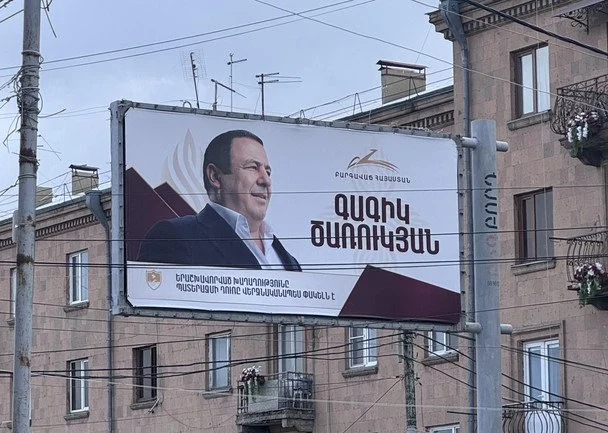
Billboard of oligarch Gagik Tsarukyan in Gyumri, Armenia’s second-largest city. Photo: Olga Konsevych
In general, fake materials are first published on social networks and then massively sent to fact-checkers from similar anonymous Gmail addresses. Fact-checkers attribute this to the pro-Kremlin “Matryoshka” scheme, where the same material is duplicated through a large number of platforms. Deepfakes, including videos calling for violence against Armenian Prime Minister Pashinyan, are also disseminated within this campaign.
Reuters reports that Western intelligence agencies consider the current campaign to be one of the most ambitious attempts by the Kremlin to influence Armenia’s political course after Yerevan began to consistently move closer to the European Union and the United States.
Unlike the countries of Central and Eastern Europe, which could gradually integrate into Western structures after the collapse of the USSR, Armenia remains caught between complex regional realities.
To the west is Turkey, with which the border has remained closed for over three decades. To the east is Azerbaijan, with which a peace agreement has not yet been signed. To the south is Iran. To the north is Georgia, which itself is going through a difficult period in its relations with the West.
This is precisely why many Armenian experts view the country’s current course not as a choice between Russia and Europe, but as an attempt to create a new system of foreign policy balances after the old system has effectively ceased to function. And it is this contradiction that will largely determine the course of the 2026 parliamentary elections in Armenia.
Unlike Moldova, where votes from citizens abroad have repeatedly influenced election results, in Armenia, the role of the diaspora is significantly limited by legislation. Even Armenian citizens who permanently reside abroad can only vote within the territory of the country. For this, they must personally come to Armenia on election day. Given that the multi-million-strong Armenian diaspora lives in France, Russia, the USA, and other countries, such a rule effectively minimizes its direct influence on election outcomes.
The Armenian government has warned that citizens who specifically arrive from Russia to participate in the parliamentary elections may receive summons for 25-day military training. Failure to undergo training carries criminal liability. Yerevan does not rule out that Russia may mobilize part of the electorate to support businessman Samvel Karapetyan. Karapetyan himself lived and worked in Kaluga, Russia, for a long time.
Author: Olga Konsevych
Comments Sort: New Old Popular Send