
NASA has included the problem of air leakage in the list of the biggest risks for the ISS.
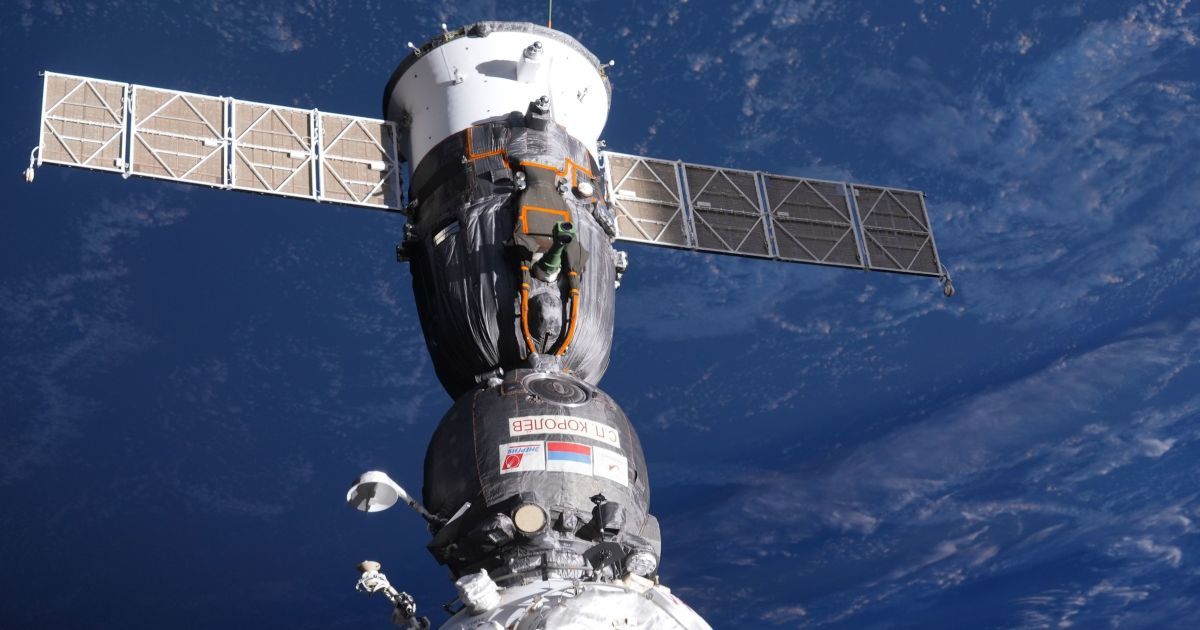
International Space Station / © Associated Press
An air leak has again been detected on the International Space Station (ISS) from a Russian module, posing a risk of a serious accident and potentially forcing astronauts to urgently leave the orbital station.
This is reported by the Daily Mail, citing NASA.
According to the publication, the leak was discovered on May 1 in the Russian module, which has had tightness issues since 2019. Each day, about one pound of air, roughly the weight of a loaf of bread, escapes into open space through the damage.
NASA stated that the damaged module is currently maintained under reduced pressure, and it can be temporarily increased if necessary. At the same time, the agency emphasizes that there is no immediate threat to the crew at the moment, and the station’s operations continue as normal.
Risk of “catastrophic failure”
Meanwhile, the Daily Mail notes that the problem has become so serious that NASA has included it in the list of the biggest risks for the ISS. According to the publication, the possibility of a “catastrophic failure” has already been discussed during internal meetings of the American space agency.
Currently, there are seven people on board the station: three NASA astronauts, one representative from the European Space Agency, and three Russian cosmonauts.
Should the situation worsen, the crew might be compelled to evacuate to Earth urgently using the docked Soyuz and Crew Dragon spacecraft.
How an emergency evacuation might proceed
According to the Daily Mail, NASA is already adhering to emergency response protocols in case of rapid depressurization.
In a critical situation, an alarm would automatically sound throughout the station, after which astronauts would need to gather in a safe zone and assess the level of threat.
Following this, the crew would begin isolating individual modules by closing airtight hatches to pinpoint the location of the leak. Specialized ultrasonic equipment is used to find cracks.
Temporarily, attempts might be made to fix the issue using emergency patches and sealants, but in the worst-case scenario, the crew would have to abandon the station entirely.
The problem has persisted for over six years
The first signs of a leak on the ISS were detected back in September 2019 in the PrK transfer tunnel, which connects the docking port to the Russian Zvezda service module.
Subsequently, specialists discovered a series of microscopic cracks in the structure. Despite numerous repair attempts, the situation gradually worsened.
By 2024, the rate of air leakage had effectively doubled, after which NASA designated the problem as one of the most serious threats to the station’s safety.
In 2025, the agency reported successful repairs and stabilization of the situation, and in early 2026, it even announced the achievement of a “stable configuration.” However, the new leak indicates that the problem has not been definitively resolved.
How much longer will the ISS operate
Currently, the decommissioning of the ISS is planned for 2030. After this, the station is slated to be deorbited and sunk in the southern Pacific Ocean.
However, NASA and the US Congress are considering the possibility of extending the station’s operation until 2032 or even longer, until the launch of full-fledged commercial orbital platforms.
As a reminder, the $100 million New Glenn rocket exploded during a planned test on launchpad 36 of the space station at Cape Canaveral in Florida. The incident could affect future NASA Artemis lunar missions.
Comments Sort by: New Old Popular Send