
During a large-scale expedition to the remote Lisi-ma Plateau in Angola, scientists discovered over seventy entirely new species of animals and insects. Among the most astonishing findings was an unknown spider that emits a bright blue glow.
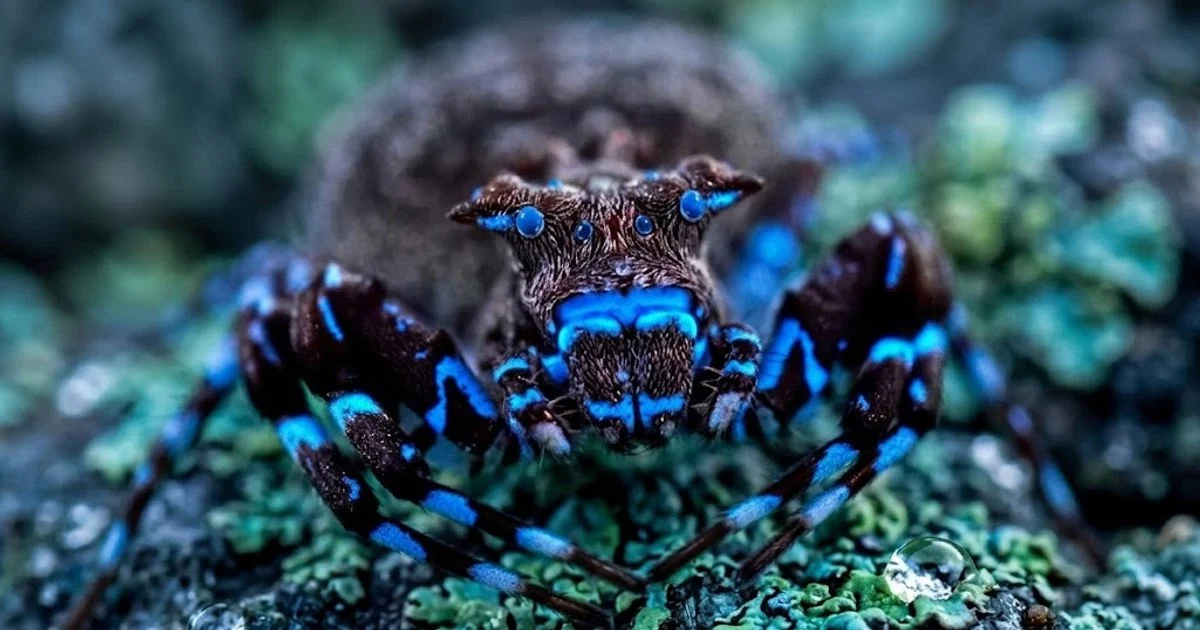
The crab spider demonstrated an incredible ability to fluoresce a bright blue color under ultraviolet light
A large-scale expedition to the little-explored Lisi-ma Plateau in Angola turned into a true triumph for world science, uncovering dozens of previously unknown living creatures. Researchers found over seventy new species in this remote region, including unique spiders, butterflies, dragonflies, and reptiles.
IFLScience writes about the results of the biodiversity research on the African continent.
Glow under ultraviolet light and camouflage
The expedition, named Cassai Life Atlas, was conducted by specialists from The Wilderness Project in February of this year. Working with a large volume of collected material, scientists immediately identified several species entirely new to science, although some findings still await expert examination.
One of the most striking discoveries was a new species of crowned crab spider, which demonstrated an incredible ability to fluoresce a bright blue color under ultraviolet light. Biologists also found an orb-weaver spider that has developed a very unusual defense mechanism. This tiny creature perfectly mimics a ladybug to effectively deceive potential predators.
Plumed moths and new dragonflies
Scientists were amazed by the diversity of winged insects, documenting over a thousand species of diurnal and nocturnal moths. Around sixty of them are candidates for the status of entirely new species, including a beautiful plumed moth. Its wings do not form a solid membrane but instead have a unique structure resembling an open bird feather.
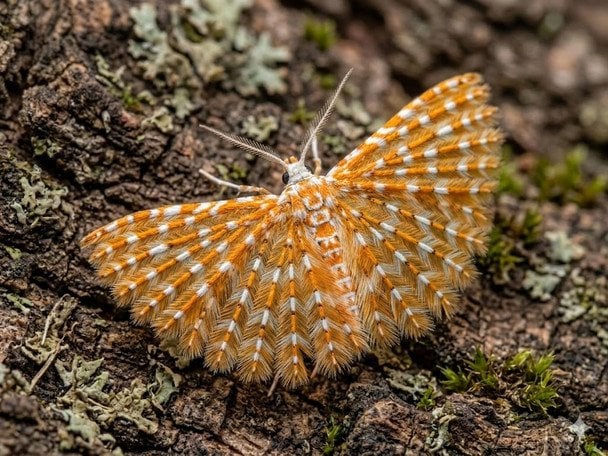
The director of the Biodiversity Laboratory, Piotr Naskręcki, admitted that he was genuinely surprised by the number of insects found, many of which are endemic to the region. Researchers also documented eight new species of dragonflies and an incredible armored cricket. Furthermore, nearly fifty species of reptiles and amphibians were found on the plateau, as well as rare cave bats.
Salvation after decades of war
The Lisi-ma Plateau plays a critically important role for the entire continent, as its waters feed Africa’s largest river systems. Decades of political instability, civil war, and mined territories had long made this region completely inaccessible for study.
Today, as roads are gradually cleared of mines and opened, scientists have gained the opportunity to explore this unique area. Biologist Laurinda de Fraga emphasized that for Angolans, this expedition is a chance to make a significant contribution to the preservation of their country’s natural heritage. The data obtained will help protect the ecosystem that supplies water and sustains the lives of thousands of people far downstream.
As a reminder, marine biologists discovered a new species of deep-sea coral, named for its striking resemblance to a Star Wars character. This coral, with its long, hair-like branches, was documented after thorough scientific analysis, although it was first observed nearly two decades ago.
Comments Sort by: New Old Popular Send