
The full-scale war initiated by Russia against Ukraine has inflicted a devastating impact not only on cities and people but also on the natural environment of the Black Sea.
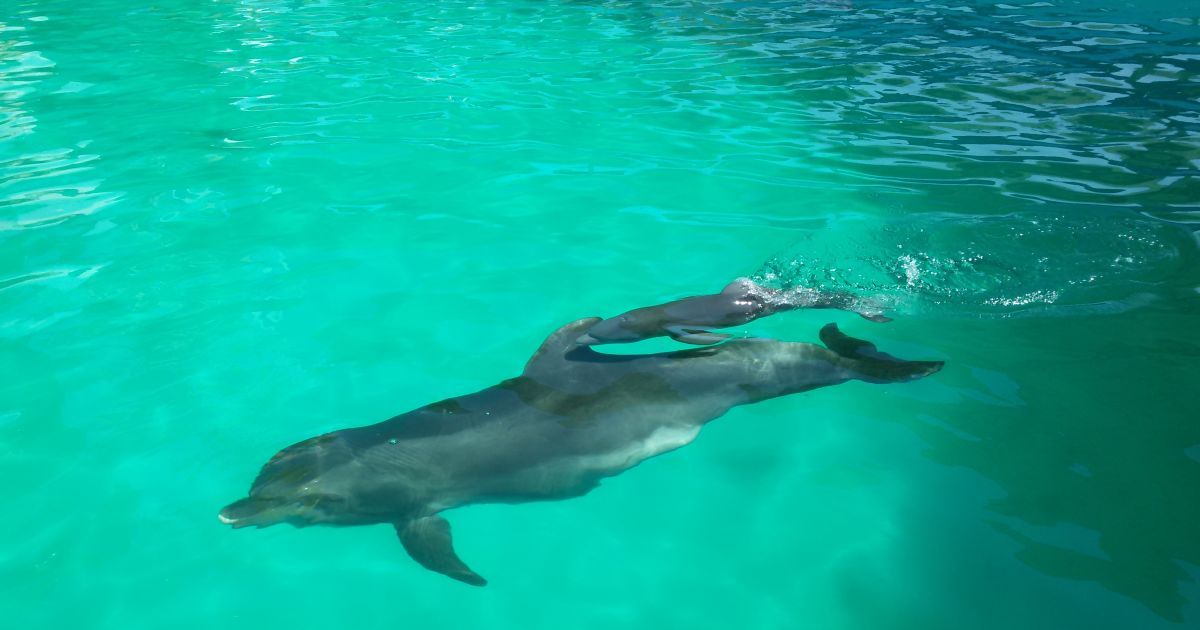
Since the spring of 2022, mass strandings of deceased dolphins have been recorded along the coastlines of Ukraine, Bulgaria, Romania, Turkey, and Georgia. Scientists hypothesize that military operations may be the cause, with population losses now estimated in the tens of thousands.
This information is detailed in a comprehensive study by NGL.media, which aggregated data from scientists across various Black Sea region countries.
Why Dolphin Deaths Are Linked to the War
According to Ivan Rusev, head of the scientific department at the Tuzly Estuaries National Nature Park, the first deceased dolphins, showing no signs of entanglement in fishing nets, began appearing by the end of March 2022.
Prior to the full-scale invasion, the majority of deceased marine animals exhibited evidence of having perished in poaching nets. However, following the commencement of active hostilities, the situation drastically shifted – dolphin carcasses were found without external injuries, prompting scientists to investigate alternative causes.
Rusev emphasizes that the bodies discovered on the shore represent only a fraction of the actual losses.
Researchers estimate that only 6–8% of deceased marine mammals wash ashore, while the rest sink to the seabed or disappear at sea.
Based on these calculations, Ukrainian specialists suggest that the Black Sea may have lost approximately 50,000 dolphins during the period of the full-scale war.
What Causes Are Scientists Considering?
Cetacean researcher Pavlo Goldin notes that definitive conclusions have not yet been reached, but all primary hypotheses are, in one way or another, connected to the war.
Among the potential reasons for the mass mortality, he lists:
-
Intense underwater noise from warships, sonars, explosions, and missile launches;
-
Blast and acoustic trauma;
-
Poisoning from fuel, ammunition components, or other toxic substances;
-
Stress and forced migration due to shifts in fish distribution;
-
Possible spread of infections caused by infrastructure damage.
The scientist states that the primary objective now is not only to quantify the losses but also to obtain irrefutable scientific evidence of the war’s impact on marine mammals.
Investigation of Ecocide
Due to the mass mortality of dolphins, the Odesa Regional Prosecutor’s Office initiated a criminal investigation in 2022 under the article on ecocide.
During necropsies, over a hundred biological samples were collected, which are currently being analyzed in leading European scientific centers, including the University of Padua (Italy) and the University of Hanover (Germany).
Specialists have not yet released the results of the analyses, explaining that a full research cycle must be completed for the obtained findings to serve as evidence in international legal proceedings.
Scale of the Tragedy
According to NGL.media, as of autumn 2023, 914 cases of dead or live, exhausted cetaceans have been documented along the coasts of Black Sea countries.
Concurrently, journalists have created an interactive map that compiles over 2,000 instances of dolphin detections on the Black Sea coast since 2017. This map clearly illustrates the sharp increase in such findings after the full-scale war began.
Scientists emphasize that following the cessation of hostilities, dedicated programs will be required for dolphin population recovery. Potential measures include establishing new marine protected areas, reducing bycatch in fishing nets, and implementing modern acoustic deterrents, which are currently being tested in Bulgaria and Turkey.
We remind you that the Faroe Islands recently experienced another wave of its traditional cetacean hunt, which resulted in the coastal waters turning red with blood.
Comments Sort: New Old Popular Send