
A chance discovery of an ancient manuscript in archival collections has shed light on one of the most macabre episodes in Scripture and prompted a fresh look at centuries-old church doctrines.
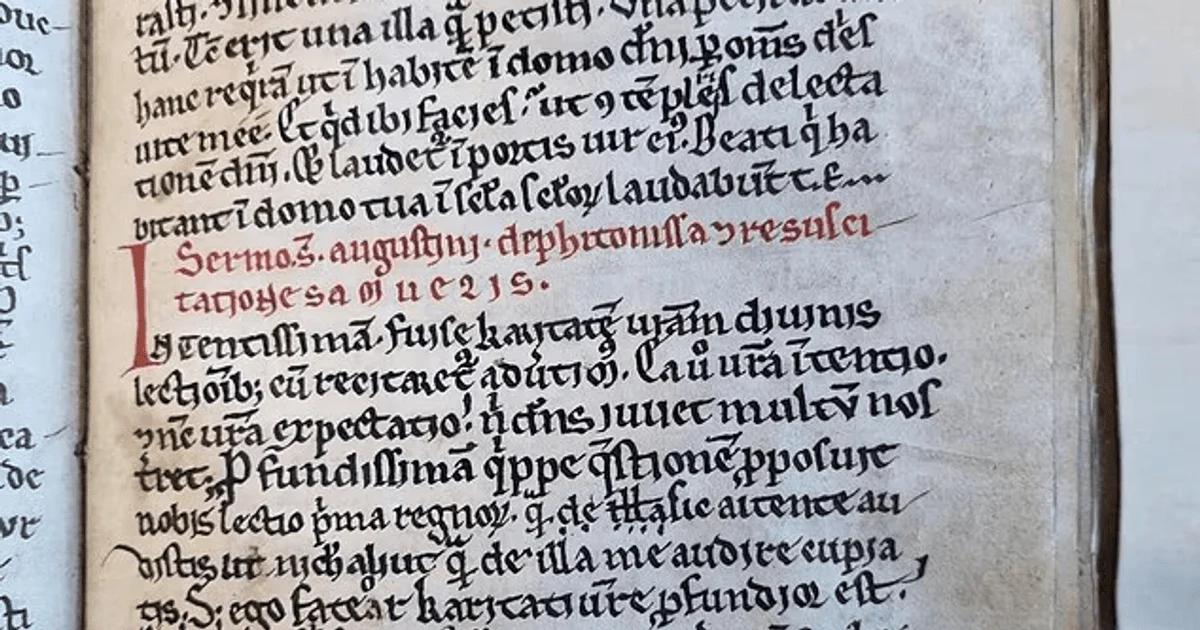
A page from an ancient manuscript containing previously unknown texts by Saint Augustine about the Witch of Endor / Photo: Diocesan Library of Bishop Jan Bernard Schlage in Pelplin
In 2024, researchers working in a Polish library identified two previously unknown texts by Saint Augustine to reveal his views on the eerie biblical story of King Saul and the Witch of Endor. These 12th-century Latin manuscripts analyze in detail the episode of summoning the spirit of the dead prophet Samuel, which has troubled Christian thinkers for centuries. Thanks to this finding, scholars have gained a better understanding of the logic and rhetoric of one of the most important theologians of the Western Church.
The Daily Mail reports on the unique deciphering of the ancient sermons of the prominent Christian thinker.
The Mystery of the Witch of Endor
According to the Old Testament, on the eve of a hopeless battle against the Philistines, King Saul turned to a witch to magically summon the spirit of the prophet Samuel to predict the future. In the discovered sermons, Saint Augustine questions whether the medium truly possessed magical power over the dead. The theologian argues that Samuel’s appearance was possible solely with God’s permission, to warn Saul of his impending doom, not through sorcery.
“The first sermon was delivered during a Sunday service and concludes with a question of theodicy and possible interpretations,” explained Professor of Latin at the University of Würzburg Christian Tornau.
“Only in the second sermon on the following Wednesday were all these options carefully weighed,” the scholar added.
Verification of Manuscript Authenticity
To confirm the authenticity of these texts, Dr. Tornau, along with Dr. Clemens Weidmann, enlisted twenty other Latin specialists. The scholars note that the style, humor, and rhetorical approach of allowing listeners to draw their own conclusions are absolutely typical of Augustine. However, the creation of such a manuscript in the 12th century is considered very unusual, as copies were usually made in the 8th or 9th centuries.
“An old monastery catalog mentions a text with the same titles and the same sequence of content as our manuscript, so it could have served as a model for copying,” said Christian Tornau.
Scientists hypothesize that a medieval scribe copied these sermons from a much older manuscript, which was subsequently lost forever. It is impossible to definitively verify this hypothesis, as the original collection of that monastic library was completely destroyed during the Thirty Years’ War from 1618 to 1648.
Recall that scientists have deciphered the exact coordinates of Noah’s Ark. A clay tablet that puzzled scientists for over 140 years turned out to be not just the oldest map of the world, but also a guide to the place where, according to Babylonian beliefs, the legendary ark still lies.
Comments Sort by: New Old Popular Send