
Greenland sharks have officially become the longest-living vertebrates on Earth. Some individuals can live up to 400-500 years, and their maturation takes over a century.
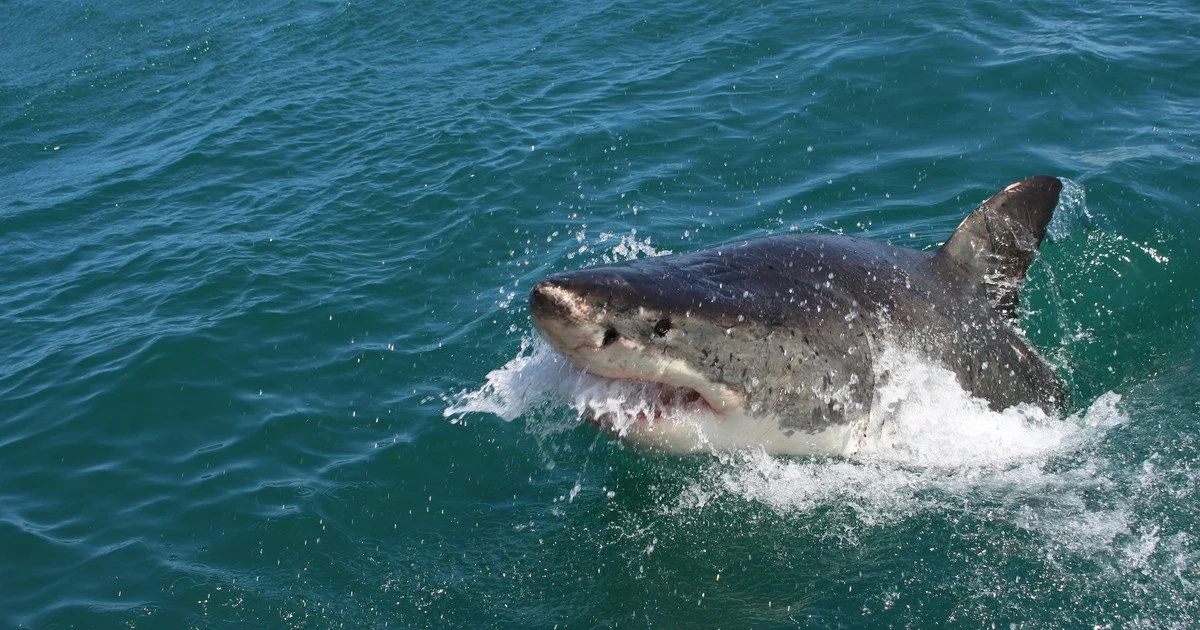
Greenland shark / © Unsplash
Greenland sharks are officially recognized as the longest-living vertebrates on the planet. Individual specimens of this species can live up to 4 centuries. Greenland sharks reach sexual maturity at 150 years old, and their juvenile stage concludes at 170 years.
This is reported by Space Daily.
What We Know About the Unique Greenland Sharks
Scientists analyzed 28 female Greenland sharks of varying sizes—from tiny individuals less than a meter long to giants exceeding five meters. These sharks lack traditional annual rings on their bones or vertebrae, so researchers developed an alternative method for determining their age.
A study published in the journal Science revealed a biological time marker in the fish’s visual organs. The nucleus at the center of the shark’s eye lens forms before birth and remains unchanged throughout its life. The carbon within these tissues serves as a chemical imprint of the shark’s birth moment.
Consequently, scientists employed radiocarbon dating, factoring in the surge in carbon-14 levels in the oceans following nuclear weapons testing in the 1950s. This allowed for the approximate age determination of each shark.
The findings were sensational, albeit with a significant margin of uncertainty. The largest shark, measuring approximately five meters, had an estimated age of 392 years. However, the study’s authors candidly note: the method’s margin of error is about 120 years in either direction. This means the actual age of this specimen is at least 272 years, and by maximum calculations, over 500 years.
Even the minimum estimated lifespan of the Greenland shark makes it an absolute record-holder among vertebrates. Based on the average estimate, this fish was swimming in the cold waters of the North Atlantic even before telescopes were invented.
A prolonged lifespan also implies slow developmental stages. Greenland sharks attain sexual maturity at 150 years old, with their juvenile period ending at 170.
They spend more time reaching adulthood than a human lifetime. The shark grows only about a centimeter per year. This life rhythm is linked to their habitat. Sharks inhabit waters with temperatures close to freezing, resulting in an extremely slow metabolism. Their bodily processes take a long time to complete, thus contributing to their longevity.
There is also a downside: a shark that needs to live 150 years before reproducing cannot quickly replenish its population if necessary. This vulnerability makes Greenland sharks defenseless against humans.
Previously, they were hunted extensively for their liver oil, and today they often become accidental catches in fishing nets. The shark population lacks the resources for recovery. Their only protection comes from the icy waters and great depths.
Sharks: Latest News
As a reminder, an international research team led by Sigeharu Kinoshita from the University of Tokyo has, for the first time, assembled the most complete genome of the Greenland shark, covering 96.7% of its DNA.
This creature is the undisputed champion among vertebrates for longevity—it can live up to 400 years in the cold Arctic and Atlantic waters, grows only about 1 centimeter per year, and reaches sexual maturity as late as 170 years.
These sharks rarely develop cancer, which prompted scientists to investigate protective mechanisms within their massive genome. DNA analysis helped identify two potential keys to the shark’s longevity: the protein histone H1.0 exhibited a unique substitution of the amino acid lysine with arginine.
Additionally, the shark possesses 59 copies of the FTH1b gene, which regulates iron levels and the process of ferroptosis. This aids the organism in effectively eliminating damaged or cancerous cells. Both findings remain hypothetical.
Comments Sort: New Old Popular Send