
Leonardo’s AW249 – a classic attack helicopter whose development was ordered before drones changed the battlefield, but Italy still talks about the experience of wars in Afghanistan, Iraq, and Somalia
Italian defense giant Leonardo is actively negotiating with the Italian Ministry of Defense to expand its order for AW249 attack helicopters.
The negotiations are currently in a fairly advanced stage, as reported by EDR, citing Leonardo’s Head of Marketing for Specialized Military Helicopters, Roberto Pretola. During the Berlin Air Show, he stated that the company plans to deliver 17 AW249s to the army by 2029, and the subject of negotiations is an order for another 14. Currently, the Italian armed forces have purchased a total of 19 units.
Defense Express notes that the plan approved by the Italian parliament includes an order for 48 AW249s at a cost of €4.648 billion, intended to replace the AW129 Mangusta, which is over 30 years old. The contract for the new helicopter’s development was signed in 2017, when the need for specialized attack helicopters was unquestionable. However, by the time of the AW249’s first flight on August 12, 2022, the actual role of such machines on the modern battlefield was questionable, and now it is highly debatable.
Even Boeing is now trying to argue that Apache attack helicopters still have a chance on the modern battlefield. In contrast, Airbus’s light, multi-role, and significantly cheaper H145 is becoming a bestseller. Therefore, the continued procurement may be a certain inertial decision. Moreover, €487 million was invested in development, and €2.283 billion for the aforementioned 19 helicopters, totaling €2.76 billion.
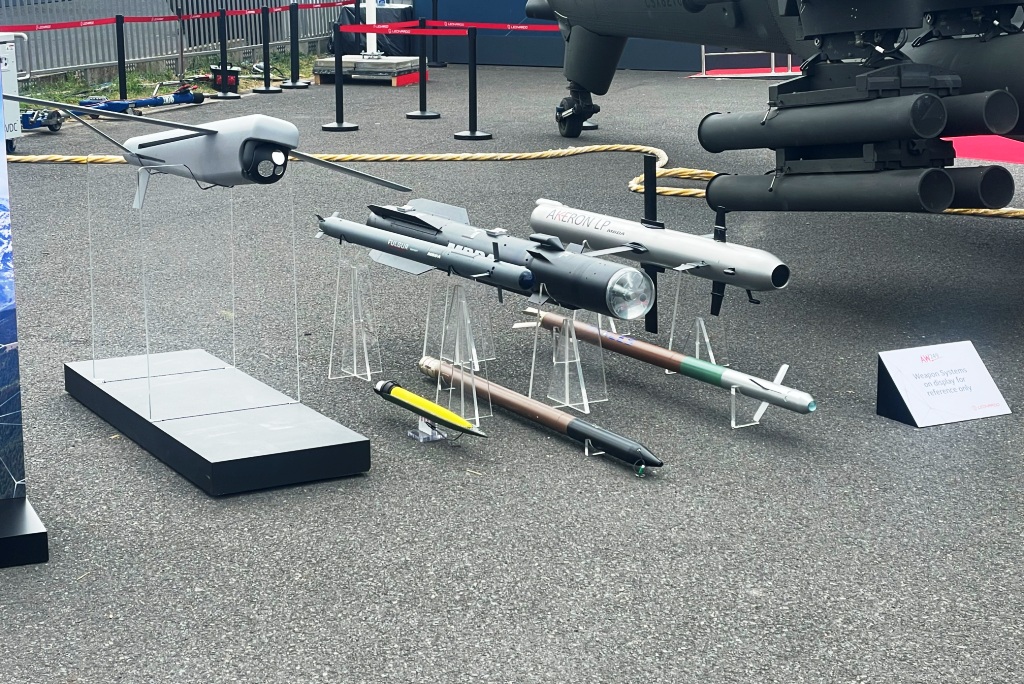
It should be noted that the AW249 is a completely classic two-seater, twin-engine attack helicopter with a maximum takeoff weight of 8.3 tons. It is armed with a 20-mm Oto Melara TM197B automatic cannon and can use Israeli Spike precision anti-tank missiles. The helicopter was also displayed at the exhibition with Brimstone and Akreon missiles. The AW249 boasts full digitization and integration into modern information exchange systems.
The quote from the AW249 program manager in the Italian army, Marco Mariononi, is also quite telling. He stated that the new helicopter reflects the lessons learned from the combat use of the AW129 in Afghanistan, Iraq, and Somalia. These lessons are being used to “keep the AW249 at the forefront of operational competitiveness.” This indicates that low-intensity conflicts still serve as the benchmark for the Italians.
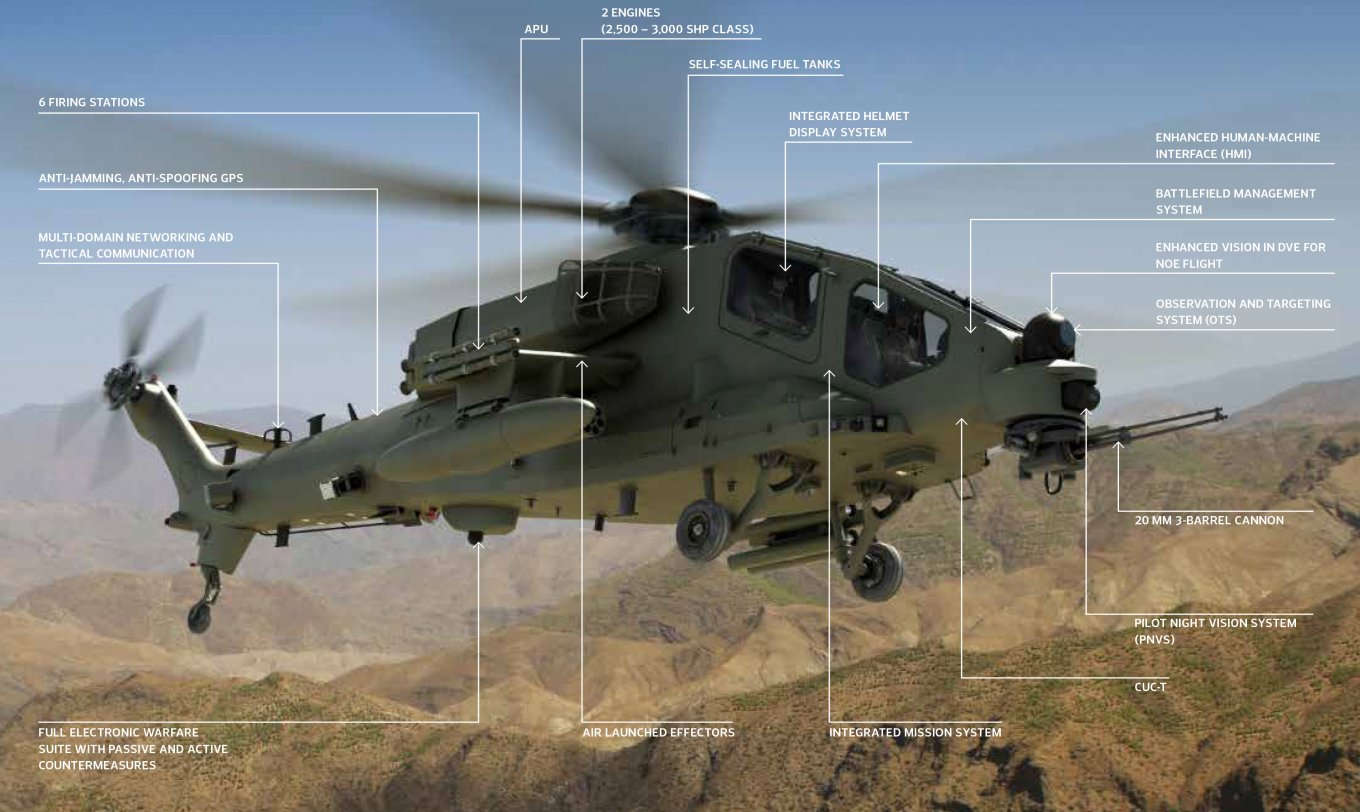
Against this backdrop, Leonardo is modernizing the concepts for its AW249. For example, the company is already working on integrating the Jump 20 tactical UAV from the American company AeroVironment into its attack helicopter. In the future, the integration of other drones is planned, but Leonardo is not yet discussing integration with “loyal wingmen.”
However, Leonardo has not even mentioned the potential use of the AW249 for destroying long-range strike drones like the “Shahed,” despite the relatively successful use of the Apache for this task. Meanwhile, new munitions for the Apache’s main 30-mm M230 automatic cannon, the M1225 Aviation Proximity Explosive (APEX) with non-contact detonation, are being integrated. This is likely due to a radio-fuzed munition rather than programming, as integrating this munition does not require structural changes to the cannon.
However, optimism is provided by the 70-mm FZ275 LGR precision guided rockets from Thales, demonstrated alongside the helicopter. These are an effective and economically viable means of combating drones.