
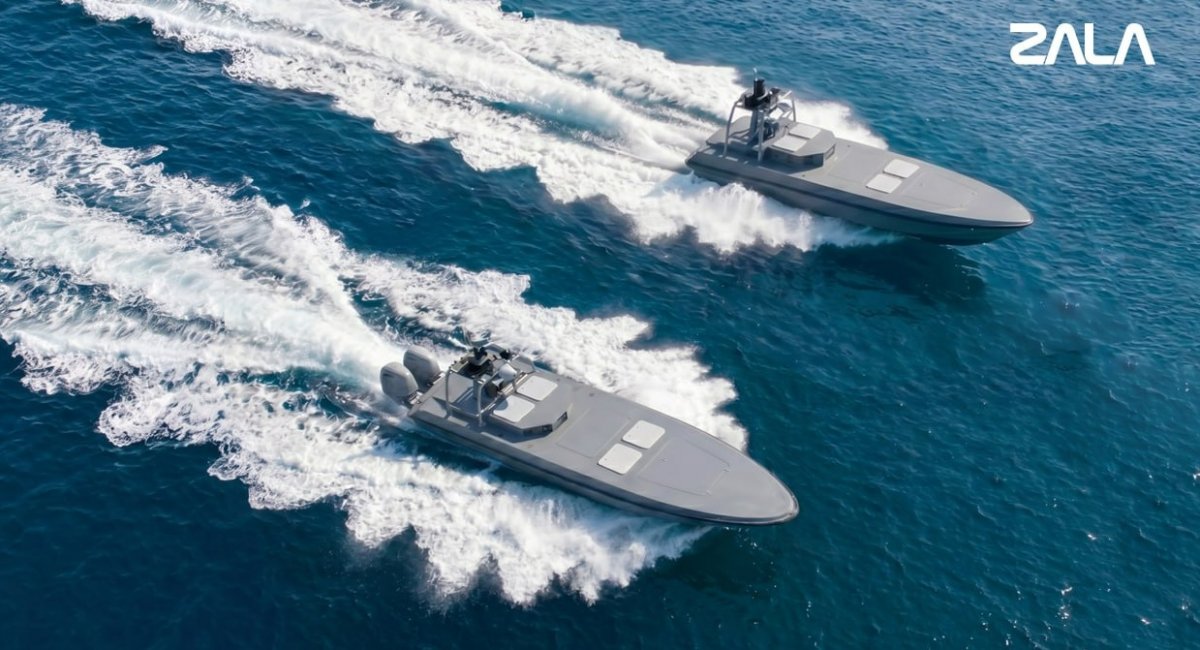
Zala, known for its reconnaissance drones and “Lancet” loitering munitions, has unveiled its “Kama” uncrewed surface vessel, whose true purpose is masked by civilian applications, but its name itself gives it away
The Russian company Zala, recognized for its reconnaissance drones and “Lancet” loitering munitions, actively employed by the invaders in the war against Ukraine, has for the first time showcased its “Kama” series of uncrewed surface vessels (USVs) at the international naval exhibition “Fleet 2026”.
The invaders claim that the “Kama” is intended for civilian and specialized tasks. Specifically, it can perform hydrographic surveys, conduct environmental monitoring by detecting illegal discharges and pollution, carry out patrols, secure water areas, and undertake rescue operations.

However, even its very name, “Kama,” could actually hint at its true purpose, namely as a kamikaze drone, by equipping it with a warhead. Although, it’s unlikely to be limited to just the kamikaze function, and it could potentially carry other armaments and systems.
Furthermore, it appears somewhat suspicious that a company that manufactures so many items for the occupying army would present uncrewed surface vessels primarily for civilian use at a naval exhibition. The reason for this secrecy is currently unclear.
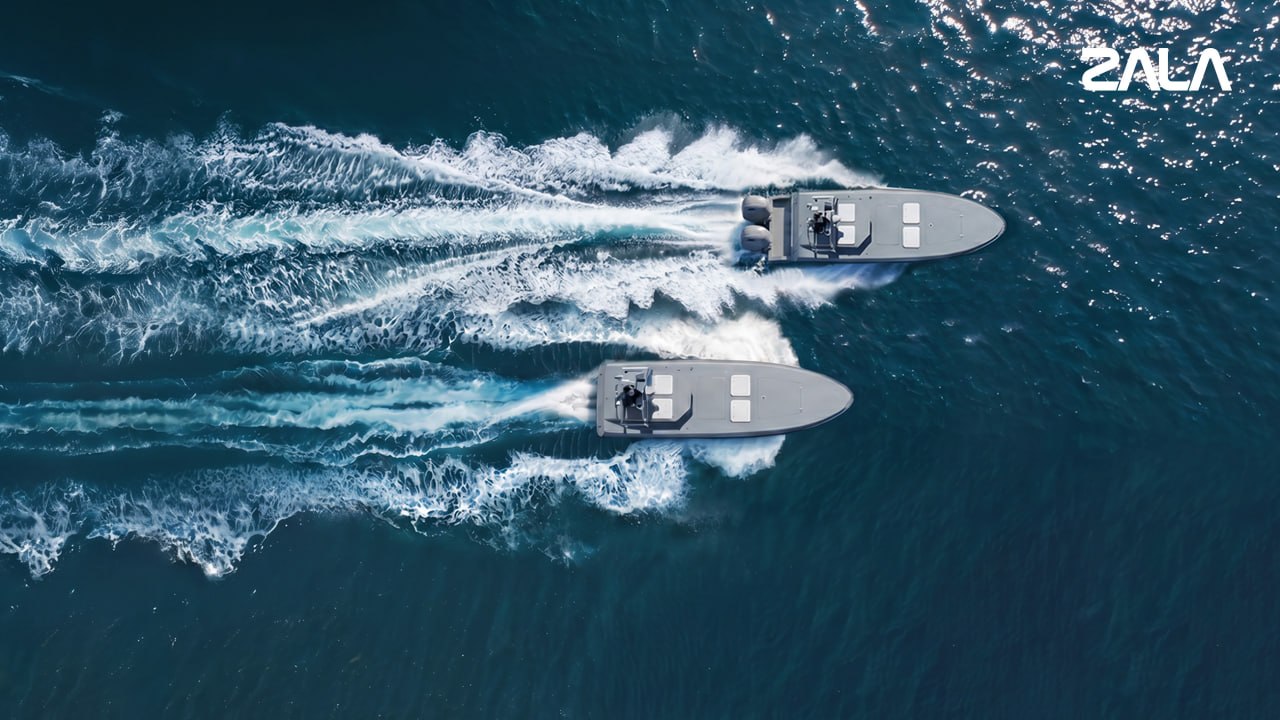
Regarding the “Kama’s” specifications, they are not particularly outstanding. The advertised endurance is up to 12 hours, with a low speed of only 12 knots (22 km/h), a payload capacity of up to 600 kg, and a range of 700 km. However, the latter point likely refers to its operational endurance rather than its deployment range.
The issue is that the invaders face significant challenges in providing communication for uncrewed surface vessels. Starlink is not fully accessible to them at present, forcing them to seek alternative communication channels. One solution is standard radio communication, but it’s evident this won’t reach 700 km and is unlikely to do so even with the use of a repeater.
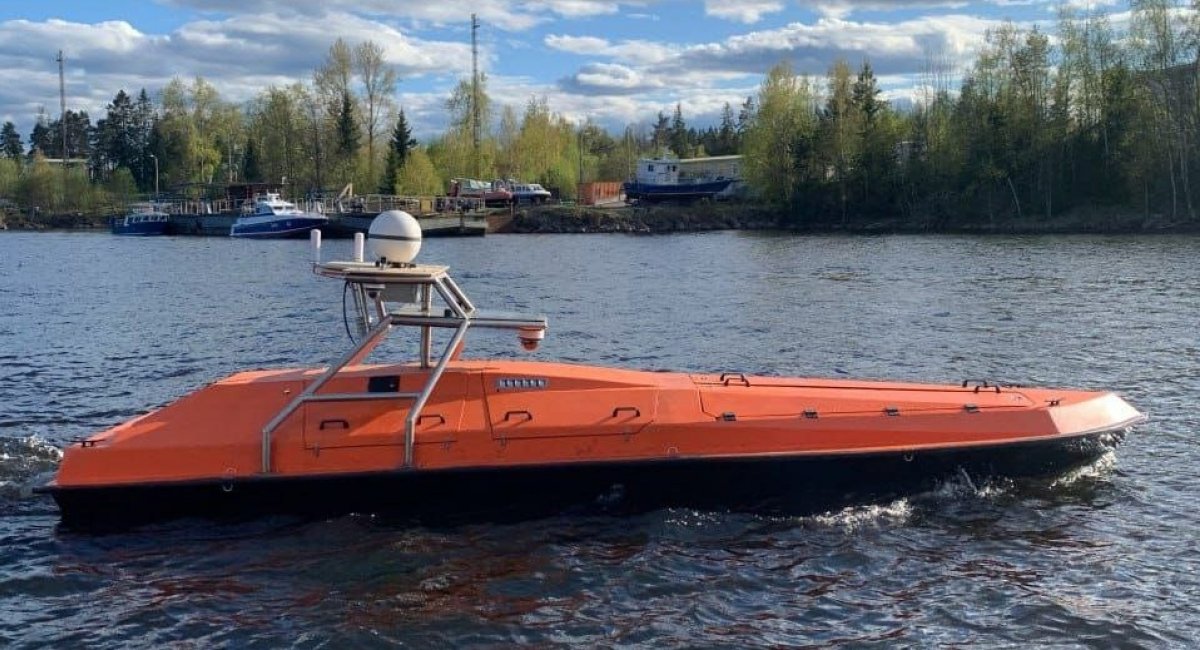
Another potential method for communication is the RS-30M type satellite communication antenna, which transmits data via the “Yamal 601” satellite in geostationary orbit. However, no such antenna is visible in the published photographs, nor is there any indication of any other satellite communication antenna.
Therefore, considering this, we can infer that the 700 km refers to the operational endurance, and the actual deployment range is limited by radio channel communication capabilities, which might extend up to tens of kilometers. For instance, one could recall the Russian USV “Katran” with a similar communication system, which, with the use of repeaters, can operate at distances of 100-200 km.