
In Russia, public fatigue with the war against Ukraine is growing, and official propaganda is increasingly losing the trust of citizens.
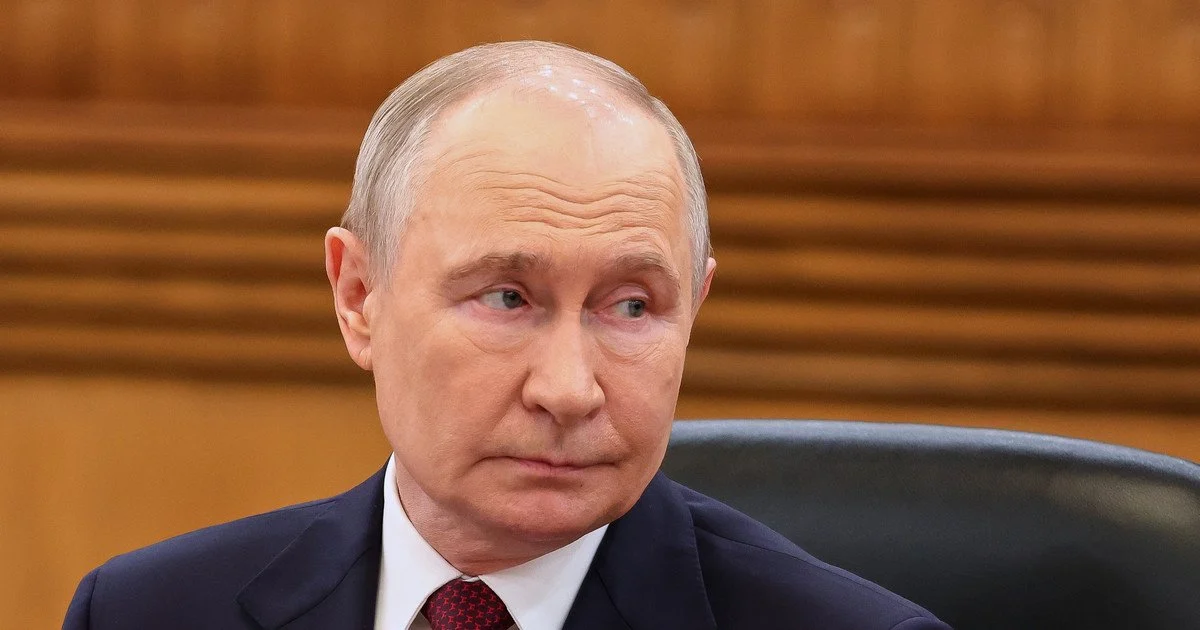
Putin / © Associated Press
Even staunch supporters of Russian aggression against Ukraine increasingly find it difficult to explain why the war continues, and Russian society places less trust in the Kremlin’s official narratives.
This is reported by American journalist Simon Shuster in his author’s article for The Atlantic.
In the material, the author analyzes in detail the role of Russian neo-Nazi Alexander Dugin, often referred to as “Putin’s brain.” For many years, he has sought to create an ideological basis for Russian expansion and war against Ukraine. At the same time, Dugin’s recent public appearances, according to the journalist, demonstrate his inability to offer a convincing explanation for the continuation of the war.
Specifically, during a recent interview, Dugin attempted to answer the question of what Russia should continue to fight for. Instead, he described the country’s future as a society returning to a rural way of life after a massive outflow of people from cities. According to him, large cities should turn into ruins, and people will live in small, isolated communities.
As Shuster notes, such statements sharply contrast with the reality of the war and the expectations of most Russians. Meanwhile, an increasing number of Russian citizens are directly facing the consequences of hostilities – from drone attacks on Russian cities to significant losses on the front lines, the scale of which is becoming increasingly difficult to conceal.
The journalist also quotes Russian opposition journalist Mikhail Zygar, who researches the sentiments of the Russian political elite. According to his assessment, the position of many influential figures in Russia has significantly changed recently.
While previously the prevailing opinion among them was the need to achieve victory at any cost, now there are increasingly frequent calls to end the war due to the lack of prospects for its successful continuation.
“Everyone is extremely exhausted. There is no one left who wants the war to continue, except, perhaps, Putin and Dugin,” says Zygar.
According to Shuster, against the backdrop of Russia’s military failures, the popularity of state television is declining, while social networks are gradually becoming the primary source of information for many Russians. It is there that discussions about the need to stop the war or revise the Kremlin’s policy are increasingly appearing.
Meanwhile, even Dugin himself has recently begun to openly express doubts about Russia’s future. At the end of May, he warned of the risk of defeat in the war.
“With the current elites, our chances are critically low not only to achieve victory but even to keep the country intact,” he wrote in his post.
The journalist paid special attention to the St. Petersburg International Economic Forum. While before Russia’s full-scale invasion of Ukraine, the forum was attended by leaders of major world powers, this year, the heads of state present were only the presidents of Uzbekistan and Tanzania.
In the author’s opinion, this became further evidence of the Kremlin’s international isolation.
In conclusion, Shuster notes that over the years of the full-scale war, the Russian authorities have failed to clearly explain to their own citizens its purpose and expected outcome. Despite attempts by dictator Putin and Kremlin ideologues to conceal public fatigue from the war, these sentiments are becoming increasingly apparent.
Earlier, it was reported that dictator Putin’s refusal of direct negotiations with President of Ukraine Volodymyr Zelenskyy has resulted in a new reputational blow for the Kremlin.
We previously informed that the military command of the aggressor nation, the Russian Federation, is not providing dictator Putin with accurate intelligence data on the real situation on the battlefield.
Comments Sort: New Old Popular Send